



When Your Fireplace Becomes a Noisemaker
If you’re hearing fireplaces making noise in Huntsville, UT, you’re not alone. The good news is that most causes are straightforward to diagnose. Huntsville’s unique climate, with its whistling winds through Ogden Valley and dramatic temperature swings, can turn a peaceful hearth into a source of pops, bangs, whistles, and scratches. Understanding these sounds is the first step to restoring the quiet ambiance you expect from your fireplace.
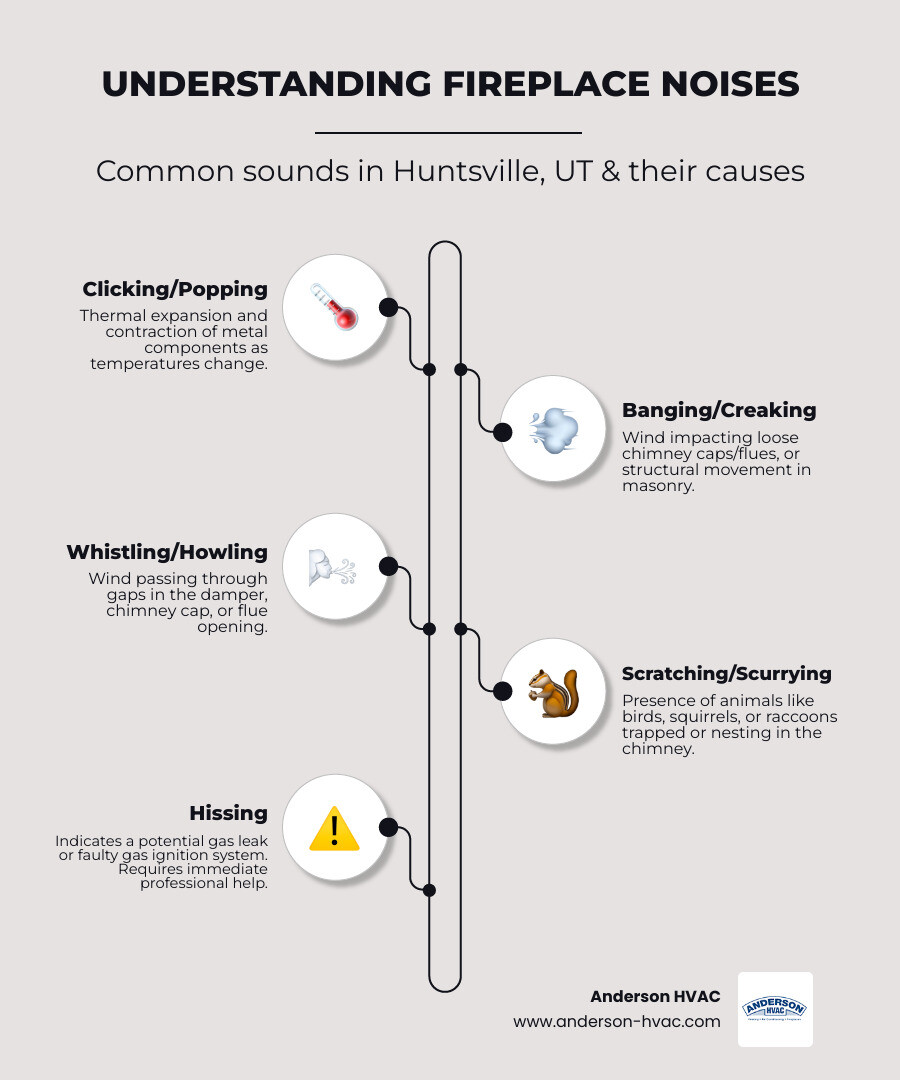
Quick Answer: Common Fireplace Noises and Their Likely Causes
- Clicking or Popping – Metal components expanding or contracting with temperature changes (usually normal)
- Banging or Loud Knocks – Wind moving loose chimney caps, unsecured flue components, or structural issues
- Whistling or Howling – Wind entering through gaps in the damper, chimney cap, or flue
- Scratching or Scurrying – Animals (birds, squirrels, raccoons) nesting or trapped in your chimney
- Hissing – Gas flow issues in gas fireplaces (needs professional attention)
- Creaking or Groaning – Masonry settling, cracks, or structural movement
For comprehensive fireplace maintenance and safety tips, check out our guide on essential fireplace services. If you need immediate professional assistance with a noisy or concerning fireplace, our team at Anderson HVAC is ready to help with expert fireplace repair and inspection services.
Common Causes of Fireplaces Making Noise in Huntsville, UT
When your fireplace starts making strange sounds, it can be alarming. While some noises signal trouble, many are simply your hearth responding to Huntsville’s unique mountain climate. Dramatic temperature swings and strong winds can turn minor quirks into noticeable noises. Soft ticking as a fireplace cools is normal, but loud bangs, whistling, or scratching deserve attention. Understanding the cause is the first step to a solution. Let’s explore the common culprits behind fireplaces making noise in Huntsville, UT. For more on this, check out this helpful resource on Why Is My Fireplace Making Noise When Off? Causes & Fixes.
Environmental Factors: Wind and Temperature
Huntsville’s weather can make your fireplace noisy. Wind is a major cause. Strong gusts in Ogden Valley can create whistling or howling as air rushes across the chimney opening or through gaps in the flue or damper. Loud bangs can occur when wind catches a loose chimney cap or an unsecured flue component. This noise often means something isn’t properly secured or has an installation issue. For more on wind-related banging, see this discussion on fireplace chimney making banging noise in wind gusts.
Temperature fluctuations also cause noise. Fireplace materials like metal and brick expand when heated and contract when cooled. This thermal expansion and contraction creates the ticking and popping sounds you hear as a fire cools down. While gentle clicking is normal, loud or excessive ticking might indicate components are rubbing together improperly. New installations can also be noisy as materials settle. Most of these sounds are harmless but can be unsettling. You can read about similar experiences at Help!! Clicking sounds in my fire place.
Mechanical and Operational Sounds
Mechanical parts in your fireplace, especially in gas and direct vent models, can create noise.
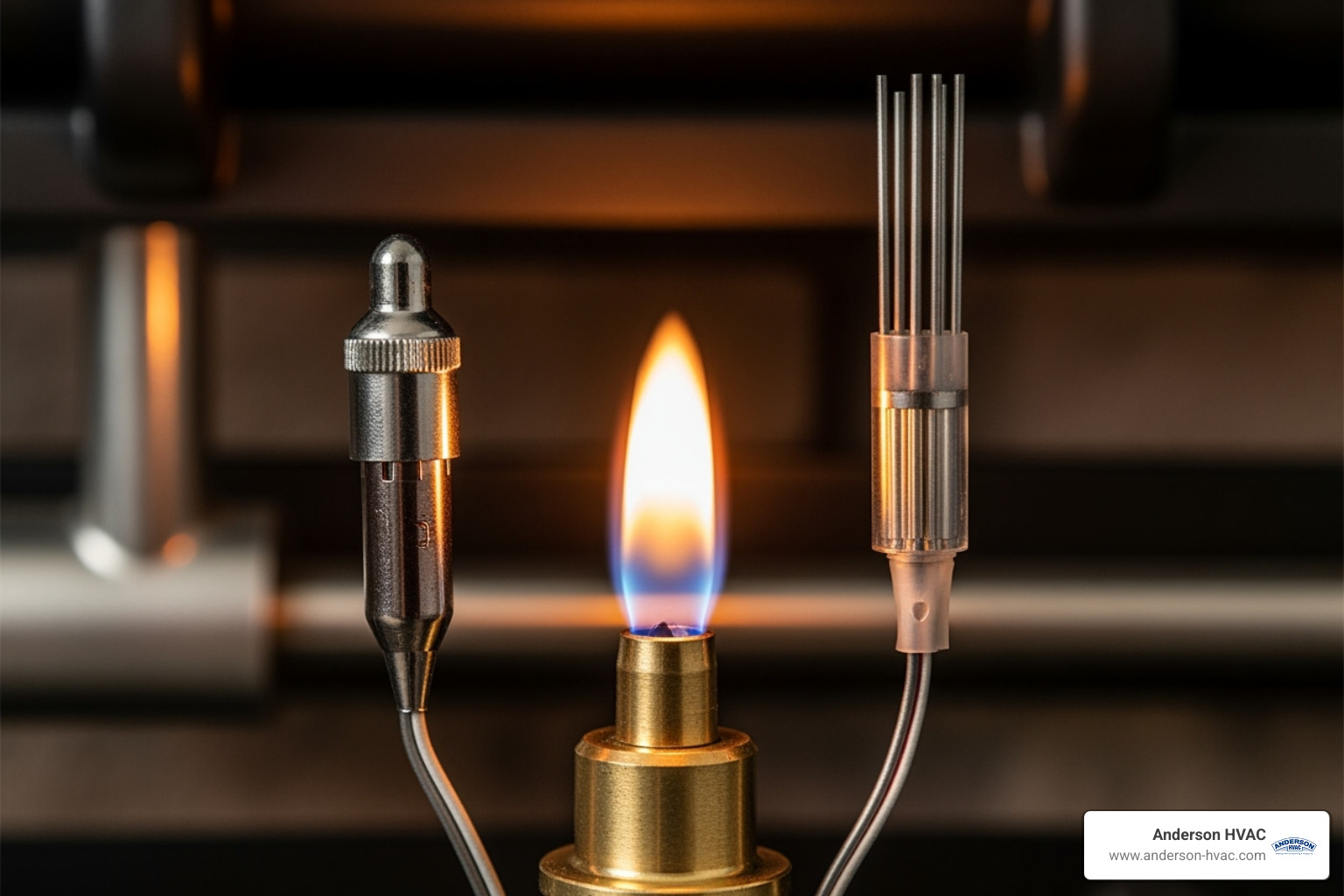
A soft whoosh during ignition in a gas fireplace is normal. However, persistent hissing can signal a gas leak or flow problem—a serious safety issue requiring immediate professional help. The pilot light assembly in your fireplace may also produce a harmless, gentle hum.
Blower fans, used to circulate warm air, create a blowing sound. If you hear rubbing or grinding, the fan may be unbalanced and hitting its housing, signaling it needs replacement.
Direct vent fireplaces often make bumping sounds as their thin-wall steel components expand and contract with temperature changes. This is normal but can be surprising. Learn more at Causes of a Direct Vent Fireplace Noise.
Finally, your damper can creak or groan if it’s old or misaligned. A loose damper may also rattle in the wind.
Uninvited Guests: Animal Intrusions
Sometimes, mystery sounds are uninvited guests. Huntsville’s wildlife, like birds, squirrels, or raccoons, may see your chimney as prime real estate. If you hear scratching, scurrying, chirping, or chittering, you likely have an animal in your chimney. This is dangerous, not just annoying. Nests can block the flue, causing smoke and carbon monoxide to enter your home. If you suspect an animal, do not light a fire or try to remove it yourself. This requires professional help for safe, humane removal and to secure your chimney against future entry. For more guidance, see Noise in Chimney: Causes and How to Fix Them.
Structural and Component Issues
Some noises signal serious problems that require professional attention.

Creaking or groaning can indicate masonry settling or structural movement. If you see cracks or the sounds are getting louder, call an expert. Cracks in the firebox or chimney compromise stability and can allow drafts or water in. The Structural Masonry Coalition offers insights on masonry integrity.
A loose chimney cap can bang in the wind and leaves your chimney open to animals and debris. A damaged flue liner can cause whistling and allow dangerous gases to escape.
For wood-burning fireplaces, creosote buildup can flake off, creating rattling sounds, and is a major fire hazard requiring professional cleaning.
A damaged damper that doesn’t seal properly causes drafts, energy loss, and whistling. Learn the signs your fireplace damper is damaged and how to address them.
How to Diagnose the Source of Your Noisy Fireplace
So, your fireplace is talking back, and you’re ready to figure out what it’s trying to tell you. The good news? Many homeowners can successfully identify the source of fireplaces making noise in Huntsville, UT with a bit of detective work and careful observation. Let’s walk through how to pinpoint exactly what’s causing those mysterious sounds.
Diagnosing Fireplaces Making Noise in Huntsville, UT: A Step-by-Step Guide
To pinpoint the cause of the noise, follow these steps:
- Note the type of sound: Is it a click, bang, whistle, scratch, hiss, or creak? Describing the sound accurately is your first clue.
- Identify when it occurs: Does it happen only when the fireplace is on, off, or cooling down? Is it consistent or random?
- Check the weather: Does the noise coincide with wind, rain, or temperature drops? Weather patterns often point to environmental causes.
- Keep a noise diary: Jot down the sound, time, duration, and weather conditions. This record helps reveal patterns and is useful if you call a professional.
After gathering these clues, perform a visual inspection.
Performing a Safe Visual Inspection
Before inspecting, prioritize safety. Ensure wood-burning fireplaces are completely cold and gas fireplaces are turned off. Never inspect a warm fireplace. Grab a flashlight and follow these steps:
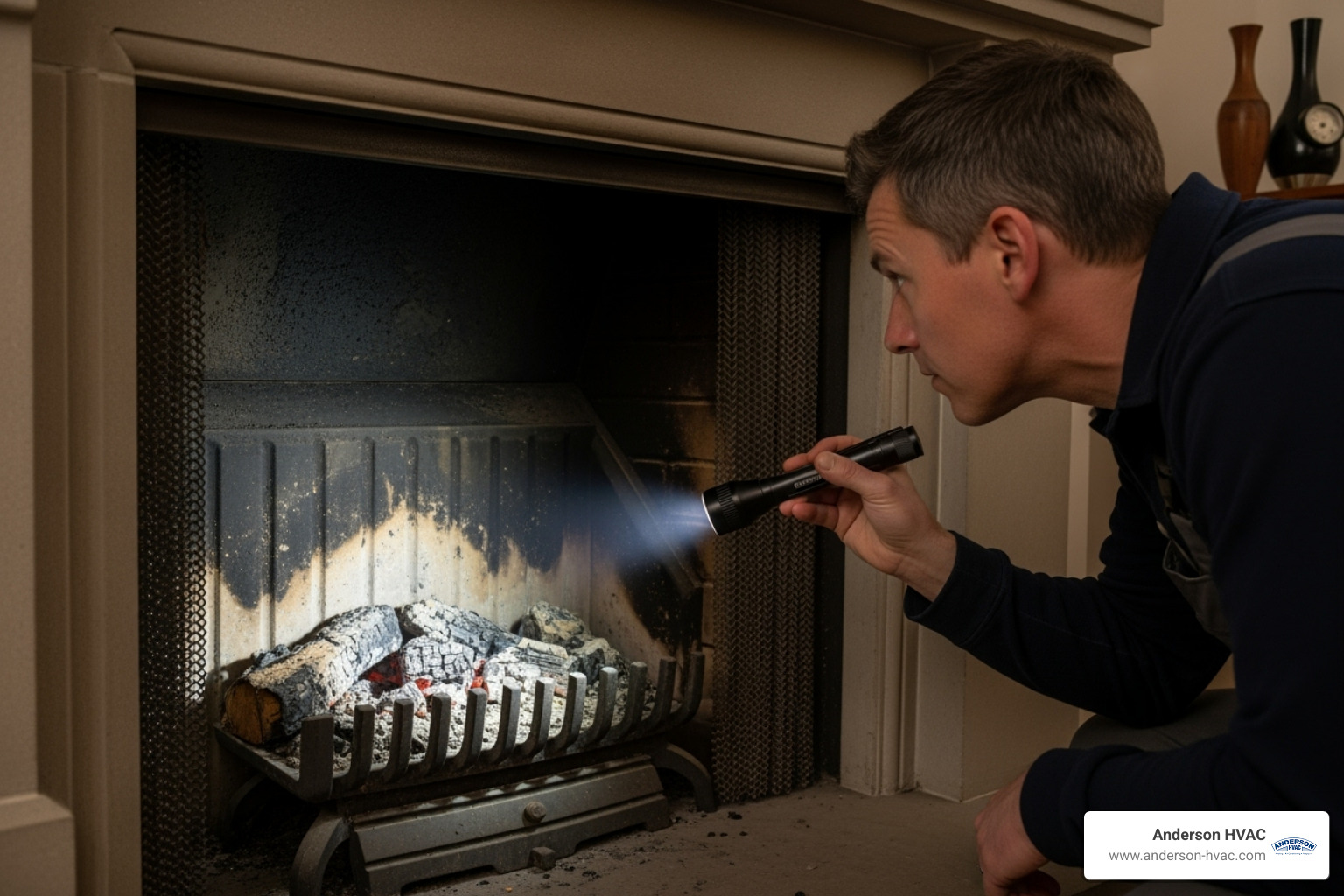
- Check the damper: Open and close it. Does it move smoothly or grind? Does it seal snugly when closed? A faulty damper can cause whistling and rattling.
- Inspect the firebox: Look for loose bricks, crumbling mortar, or cracks in the masonry. Check that metal components like grates and heat shields are stable.
- Look for debris: Check for leaves, twigs, or nest materials that could cause rattling or indicate animal activity. If you can see up the flue safely, check for obstructions.
- Examine the masonry: Inside and out, look for cracks, water stains, or crumbling sections that suggest structural issues.
- Check the chimney cap: Use binoculars from the ground to look for a loose or damaged cap, missing screen, or debris. A loose cap is a common source of banging noises.
- For gas fireplaces: If accessible, check the burner area for loose connections or debris.
This inspection can help you identify many common issues. For more safety guidance, see our guide with 5 easy steps to make sure your fireplace is safe. If you’re unsure about what you see, call a professional to ensure your safety.
Silencing the Sounds: Solutions for a Noisy Fireplace
Now that you’ve done some detective work and have a better sense of what’s causing your fireplace to make noise, it’s time to explore solutions. Some issues are straightforward fixes you can handle yourself, while others are best left to professionals who can ensure your safety and restore peace to your home.
DIY Fixes for Fireplaces Making Noise in Huntsville, UT
For minor issues, a few DIY steps can quiet things down:
- Rattling Damper: If your damper rattles or whistles, try tightening visible screws or adjusting its position. For a stiff damper, a heat-resistant lubricant may help, but a severely damaged one needs replacement.
- Visible Debris: Carefully remove leaves, twigs, or other debris from a cool firebox to stop rattling sounds.
- Noisy Blower Fan: A rubbing noise from a blower fan often indicates debris. After turning off the power, inspect and clean the fan area. An unbalanced fan may need replacement. The principle of clearing obstructions, as shown in resources like this video on how to silence a noisy faux fireplace, applies to many fireplace types.
- General Rattling: Secure loose grates, log holders, or decorative panels inside the firebox to stop vibrations.
- Loose Chimney Cap: If you can safely check from the ground, you may be able to tighten a loose cap. However, for roof access, call a professional. A secure cap prevents wind noise and animal entry.
When to Call for Professional Help
While some fixes are DIY-friendly, certain noises require professional help for safety. Call us if you notice:
- Persistent Loud Noises: Banging, creaking, or groaning, especially if worsening, can signal serious structural or mechanical issues.
- Suspected Animal Intrusion: If you hear scratching or scurrying, do not light a fire. An animal needs to be removed humanely by a professional.
- Visible Structural Damage: Cracks in masonry, crumbling mortar, or a tilted chimney compromise safety and require an expert assessment. We can determine if you need repairs or if you’re seeing warning signs you need fireplace replacement.
- Gas-Related Issues: If you smell gas or hear hissing, turn off the gas supply, evacuate, and call the gas company, then us. This is a serious carbon monoxide hazard.
- Water Leaks or Stains: These can indicate a damaged flue liner or structural issues that lead to extensive damage.
- Smoke in Your Home: Smoke backing up into your room is a critical safety issue that needs immediate diagnosis.
For any of these concerns with fireplaces making noise in Huntsville, UT, our team at Anderson HVAC provides top fireplace services. With over 40 years of experience, we understand how Huntsville’s climate affects your fireplace and can ensure your home is safe and quiet.
Preventive Maintenance for a Quiet, Safe Fireplace
The best way to keep your fireplace quiet? Don’t let problems develop in the first place. Regular maintenance is your secret weapon against fireplaces making noise in Huntsville, UT, and it ensures your hearth stays safe, efficient, and ready to warm your home whenever you need it.
Think of your fireplace like your car – it needs regular check-ups to perform its best. Annual inspections with a certified professional are absolutely essential. During these visits, we examine every component of your fireplace and chimney system, looking for early warning signs like creosote buildup, damaged flue liners, loose components, or the beginnings of structural damage. Catching these issues early means they never get a chance to turn into the noisy (and expensive) problems that wake you up at night.
Regular cleaning isn’t just about aesthetics – it’s about safety and silence. If you burn wood, chimney sweeping removes the creosote and debris that can rattle around, block airflow, or worse, ignite into a chimney fire. Even if you have a gas fireplace, dust and debris can accumulate over time, affecting performance and potentially causing unusual sounds. A clean fireplace is a happy, quiet fireplace.
Your chimney cap is like a security guard for your flue. A properly installed, wind-resistant cap keeps out rain, snow, leaves, and those chattering critters we talked about earlier. It also helps stabilize airflow during Huntsville’s gusty days, preventing those eerie whistling and banging sounds that wind can create. If your cap is damaged or missing, replacing it should be at the top of your to-do list.
Huntsville’s weather can be tough on masonry. Our freeze-thaw cycles – where moisture seeps into tiny cracks, freezes, expands, and causes bigger cracks – can slowly deteriorate your chimney structure. Weatherproofing your masonry with a quality water-repellent sealant every few years creates a protective barrier. This prevents moisture penetration, which means fewer cracks, less deterioration, and ultimately, fewer structural noises.
Don’t forget about your damper, either. Periodically checking that it opens and closes smoothly, and seals completely when shut, prevents drafts and the whistling sounds they bring. A little attention to this simple component can make a big difference in your comfort and peace of mind.
Here’s a simple seasonal approach to fireplace care:
- Spring – Schedule your annual inspection and cleaning after the heating season ends
- Summer – Walk around your home and check the exterior chimney for visible damage or loose components
- Fall – Before the first fire of the season, peek inside your firebox and check that the damper operates smoothly
- Winter – Enjoy your beautifully quiet fireplace, knowing you’ve done the work to keep it that way
For comprehensive fireplace maintenance and inspections in the Huntsville area, our experienced team is here to help. We also proudly serve nearby communities, providing complete fireplaces north ogden ut services to keep your home warm and worry-free all season long.
Frequently Asked Questions about Fireplace Noises
Living in Huntsville means dealing with unique challenges when it comes to our fireplaces, and we’ve heard just about every question you can imagine. Let’s tackle some of the most common concerns we hear from homeowners experiencing fireplaces making noise in Huntsville, UT.
Is it normal for my fireplace to make clicking or popping sounds when it’s off?
Here’s the good news: some clicking and popping is completely normal, especially after you’ve enjoyed a cozy fire. Think of it as your fireplace settling in for a rest. These sounds are typically caused by the metal components of your fireplace—like the firebox lining or flue pipe—expanding when they heat up during use and then contracting as they cool back down. It’s just physics at work.
Mild, intermittent ticking or gentle popping sounds are usually nothing to worry about. However, there’s a difference between a gentle “tick-tick” and a startling “BANG!” If the sounds are very loud, happen frequently when the fireplace is cold, or sound more like sharp bangs than soft pops, something might be rubbing or moving more than it should. That’s when it’s worth having a professional take a look to make sure everything is properly secured and functioning as it should.
Can wind really make my chimney bang loudly?
Absolutely, and it can be quite alarming when it happens! Strong wind gusts sweeping through Ogden Valley can definitely turn your chimney into a noisemaker. If you’re hearing loud banging during windy weather, it usually means something isn’t secured as tightly as it should be.
The most common culprits are loose chimney caps that can rattle and bang against the chimney crown, improperly installed or damaged flue liners that shift in the wind, or even a damper that’s flapping because it’s not seated correctly. The wind catches these loose components and causes them to move and strike against the solid chimney structure—hence the banging sound. This isn’t just annoying; it can indicate an installation issue or structural weakness that could lead to more serious problems down the road. If your chimney is making percussion sounds during windstorms, it’s definitely worth having us take a look to secure everything properly.
What should I do if I hear scratching in my chimney?
This is one situation where you need to act quickly but carefully. If you hear scratching, scurrying, chirping, or any other sounds that suggest something living is in your chimney, here’s what to do: Do not start a fire. This is crucial. Lighting a fire won’t solve the problem—it will harm the animal and could push dangerous smoke and carbon monoxide back into your home if the flue is blocked by a nest or the animal itself.
The scratching sound indicates that an animal—likely a bird, squirrel, or raccoon—is trapped or has decided your chimney makes a perfect home. Your best course of action is to contact a professional for safe and humane removal. Once the unwelcome guest is out, we can inspect your chimney for any damage they may have caused and install a proper chimney cap with screening to prevent future animal intrusions. It’s the safest solution for both you and the wildlife.
Your Local Experts for Fireplace Peace and Quiet
Living with fireplaces making noise in Huntsville, UT doesn’t have to be your new normal. Throughout this guide, we’ve explored the symphony of sounds your fireplace might be producing—from the whistling winds that sweep through our valley to the clicking of cooling metal, the scratching of uninvited critters, and the banging of loose components. We’ve armed you with the knowledge to identify what’s causing those mysterious sounds and given you practical steps to diagnose the issue safely.
Some noises, like gentle ticking as your fireplace cools down, are simply part of living with a hearth in our mountain climate. But here’s the truth: persistent, loud, or unusual sounds deserve attention. Your fireplace should be a source of warmth and comfort, not a source of worry or sleepless nights wondering what that bang was.
Safety always comes first. If you’re hearing persistent loud noises that won’t go away, if you’ve spotted cracks in your masonry, if you smell gas, or if you suspect an animal has made your chimney their new home, it’s time to bring in professional help. These aren’t just annoyances—they’re potential safety hazards that need expert eyes.
At Anderson HVAC, we’ve been serving Huntsville families for over 40 years, and we understand the unique challenges that come with maintaining a fireplace in our climate. We know how Ogden Valley’s winds can rattle a loose chimney cap and how our temperature swings can make metal components sing. More importantly, we know how to fix these issues and restore that peaceful crackling you actually want to hear.
Whether you need a thorough inspection, animal removal and chimney securing, structural repairs, or just peace of mind, our team can provide all the essential fireplace services your Huntsville home needs. We’ll make sure your fireplace is safe, efficient, and—most importantly—quiet, so you can get back to enjoying those cozy evenings by the fire without the unexpected soundtrack.
Don’t let a noisy fireplace steal your comfort. When you’re ready to restore peace and quiet to your home, we’re just a phone call away. Let us help you enjoy your fireplace the way it was meant to be enjoyed—warm, safe, and blissfully silent.