


Why How Proper Maintenance Extends Heat Pump Lifespan Is the Most Important Thing You Can Do for Your System
How proper maintenance extends heat pump lifespan is simple: regular care reduces mechanical wear, keeps components running efficiently, and can add 5 to 7 years — or more — to your system’s life.
Here’s a quick summary:
| Action | Impact on Lifespan |
|---|---|
| Change filters every 1-3 months | Prevents system strain and premature part failure |
| Clear debris around outdoor unit | Maintains airflow and protects the compressor |
| Schedule annual professional tune-ups | Catches small faults before they cause major damage |
| Use thermostat settings correctly | Reduces unnecessary cycling and wear |
| Address strange noises or rising bills fast | Stops one failing part from damaging others |
A well-maintained heat pump typically lasts 15 to 20 years. A neglected one? Often just 8 to 10.
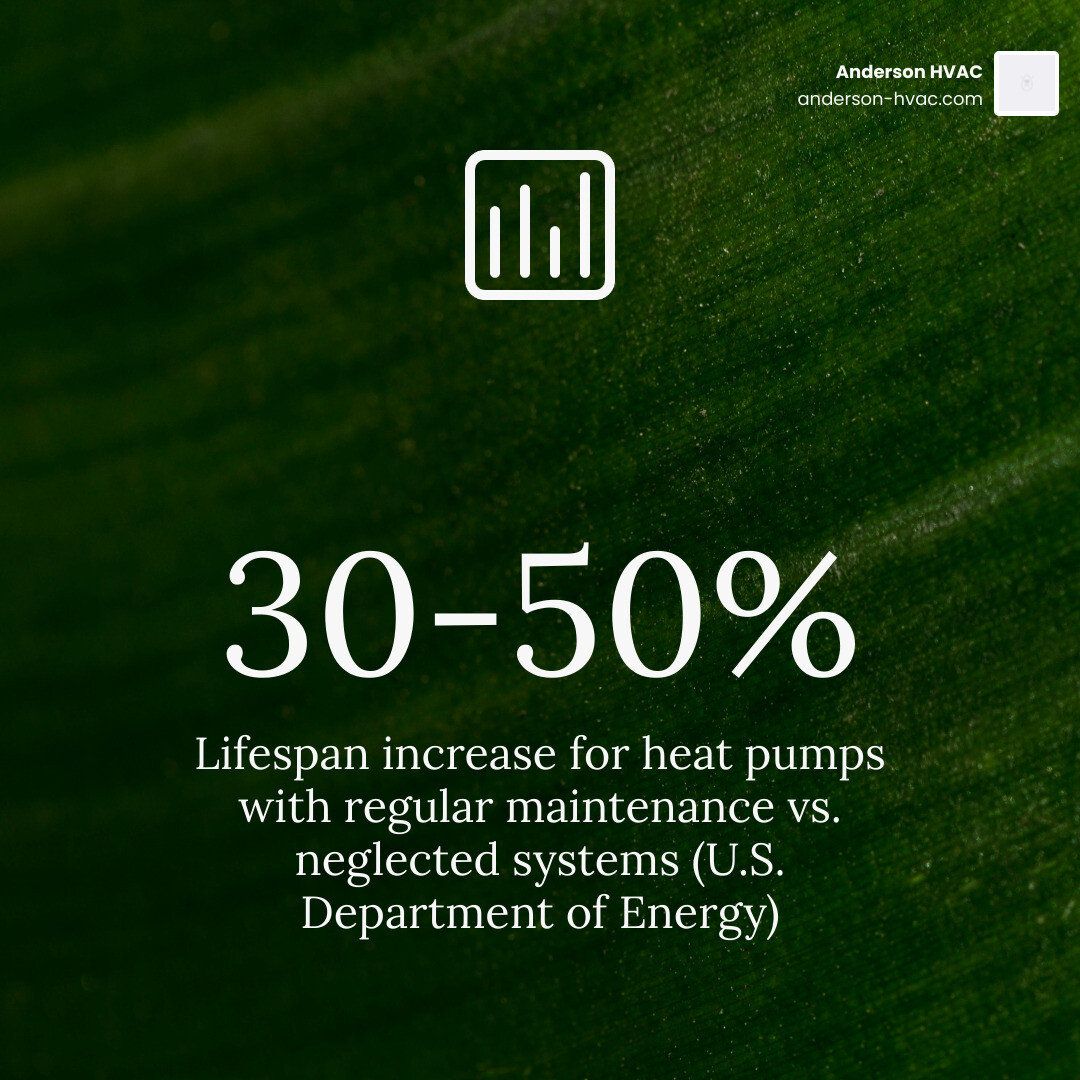
For Northern Utah homeowners, your heat pump works hard — through cold Ogden winters and hot summers alike. That year-round demand means wear adds up faster than you might expect. The good news is that most of what shortens a heat pump’s life is completely preventable. According to the U.S. Department of Energy, a properly maintained heat pump uses 10 to 25 percent less energy than a neglected one — and systems that receive consistent care last 30 to 50 percent longer than those that don’t.
Whether your system is brand new or several years old, the habits you build now will directly shape how long it serves your home and how much it costs to run.
Understanding How Proper Maintenance Extends Heat Pump Lifespan
When we talk about heat pump longevity, we aren’t just talking about luck. We are talking about physics. A heat pump is a mechanical system with moving parts, high-pressure refrigerants, and sensitive electrical circuits. Every time it turns on, those parts experience friction and heat.
The core secret to how proper maintenance extends heat pump lifespan is the reduction of “mechanical stress.” When a system is dirty or poorly adjusted, it has to work harder and run longer to achieve the same temperature. This is like driving your car with the parking brake partially engaged—it might still move, but you are destroying the engine in the process.
The 15-Year Goal vs. The 8-Year Failure
In our 40+ years serving Northern Utah, we’ve seen a clear divide in system durability. Systems that receive twice-yearly professional service and monthly homeowner attention typically last 30–50% longer than neglected ones.
| System Status | Estimated Lifespan | Typical Condition at Year 10 |
|---|---|---|
| Well-Maintained | 15–20+ Years | Efficient, quiet, original compressor |
| Neglected | 8–12 Years | High bills, frequent repairs, failing motor |
Sizing and Installation: The Foundation of Longevity
Maintenance actually begins on “Day One.” If a heat pump is improperly sized—meaning it’s too big or too small for your home—it will never reach its full life expectancy. An oversized unit will “short cycle,” turning on and off rapidly, which puts immense strain on the compressor. An undersized unit will run constantly, wearing out the motor. We always use Manual J sizing to ensure your system is perfectly matched to your home’s square footage and insulation levels.
Furthermore, the “50% Rule” is a helpful guide as your system ages: if a repair costs more than 50% of the price of a new system, it’s usually time to look at heating services for a replacement. However, with the right care, you can push that decision years into the future.
Essential DIY Care for Northern Utah Homeowners
You don’t need a tool belt to help your heat pump live longer. In places like North Ogden or Layton, our environment can be tough on outdoor equipment. Dust from the foothills, cottonwood seeds in the spring, and heavy snow in the winter all conspire to choke your system’s airflow.
Airflow is the lifeblood of a heat pump. If the outdoor unit can’t “breathe,” it can’t exchange heat. This forces the compressor—the most expensive part of your system—to work at higher pressures and temperatures, leading to premature burnout.
Actionable DIY Steps:
- Clear the Perimeter: Maintain at least 18 to 24 inches of clear space around your outdoor unit. Trim back bushes, remove tall weeds, and ensure no patio furniture is blocking the vents.
- The Gentle Rinse: Twice a year, use a garden hose on a gentle “shower” setting to rinse dust and dirt off the outdoor coils. Never use a pressure washer, as it can bend the delicate aluminum fins.
- Snow Patrol: During our Utah winters, ensure snow doesn’t bury the unit. A heat pump needs to pull heat from the outdoor air; if it’s encased in a drift, it will fail.
- Check the Vents: Inside your home, make sure furniture or curtains aren’t blocking the supply or return registers. This is a critical part of air conditioning services that homeowners often overlook.
Monthly Filter Checks to Support How Proper Maintenance Extends Heat Pump Lifespan
If there is a “Number One” reason for heat pump service calls, it’s a dirty filter. A clogged filter acts like a wall, forcing the blower motor to work twice as hard to move air. This doesn’t just raise your power bill; it causes the indoor coil to fluctuate in temperature, which can lead to ice buildup or even liquid refrigerant “slugging” back into the compressor.
We recommend checking your filters every 30 days. While some high-efficiency media filters can last 6 months, homes in Farr West or Kaysville with pets or high foot traffic often need a change every 1 to 2 months.
When choosing a filter, look at the MERV rating. A MERV 8 to 11 is usually the “sweet spot” for residential systems—it provides excellent filtration services without being so thick that it restricts airflow.
Signs your filter is killing your heat pump:
- The system runs for hours without reaching the set temperature.
- You notice a “musty” smell when the air kicks on.
- There is visible dust buildup on your supply vents.
- The indoor unit makes a whistling or straining sound.
Optimizing Thermostat Usage for System Longevity
How you interact with your thermostat plays a massive role in how proper maintenance extends heat pump lifespan. Heat pumps are “slow and steady” machines. Unlike a gas furnace that blasts heat, a heat pump maintains a consistent temperature most efficiently.
One of the biggest mistakes we see is the “Big Setback.” If you drop your thermostat by 10 degrees at night and then crank it up in the morning, the heat pump may realize it can’t close that gap quickly enough. It will then trigger the “Emergency Heat” or “Backup Heat” (electric resistance strips). Not only is this backup heat incredibly expensive to run, but the constant toggling between modes creates unnecessary wear on the reversing valve and contactors.
For the best results, try to keep your thermostat at a steady temperature, or use a smart thermostat designed for heat pumps that can gradually ramp up the temperature without engaging the backup heat. If you’re struggling with inconsistent temps, it might be time for Kaysville heating repair to check your thermostat’s calibration.
The Critical Role of Professional Tune-Ups
While DIY care is essential, there are things a homeowner simply can’t (and shouldn’t) do. Professional maintenance is where the “hidden” killers of heat pumps are dealt with. A technician from us will look at the system through the lens of 40 years of experience, identifying issues that aren’t visible to the naked eye.
During a professional tune-up, we focus on:
- Refrigerant Levels: If your refrigerant is even 10% low, your system loses significant efficiency and the compressor runs hotter. Conversely, too much refrigerant is just as dangerous.
- Electrical Connections: Utah’s temperature swings cause wires to expand and contract. Over time, terminals can loosen, leading to “pitting” or electrical fires. We tighten every connection to ensure safety.
- Moving Parts: We lubricate motors and bearings. Friction is the enemy of longevity; a well-lubricated motor runs cooler and lasts years longer.
- Drain Lines: We flush the condensate drain line. A clogged drain can cause water damage to your home and create high humidity levels that stress the system.
Whether you need Farr West heating repair or a routine check-up in Syracuse, these professional touches are what prevent the “cascading failure” where one small part breaks and takes the whole system down with it.
Why Expert Calibration is Key to How Proper Maintenance Extends Heat Pump Lifespan
Calibration is the “fine-tuning” of your HVAC system. A heat pump that is out of calibration might think the house is 70 degrees when it’s actually 68. This leads to “short cycling,” where the system turns on and off too frequently.
During a visit, we test the sensors and the thermostat’s communication with the outdoor unit. We also check the “static pressure” within your ducts. If the pressure is too high, it means your ductwork is restricting airflow, which is a common issue we address during Clinton heating repair calls. Proper balancing ensures that every component—from the fan to the compressor—is working in harmony, rather than fighting against each other.
Addressing Minor Faults Before They Escalate
The “Secret” to a 20-year heat pump is often just listening to it. Most major breakdowns start as small, manageable noises or slight changes in performance.
If you hear a “clunk” when the system starts, a “hissing” sound (which could indicate a refrigerant leak), or a “shrieking” sound (often a belt or bearing), don’t wait. Ignoring these signs is how a simple repair turns into a total system replacement. Proactive care is the hallmark of Kaysvilles best kept secrets for low cost heater repair—catching a failing capacitor today prevents a blown compressor tomorrow.
Frequently Asked Questions about Heat Pump Longevity
What is the average lifespan of a heat pump in Utah?
In our Northern Utah climate, the average lifespan is 10 to 15 years. However, because we experience both extreme cold and significant summer heat, “average” often means “neglected.” With the proper maintenance routines we’ve discussed, reaching 20 years is very achievable. Geothermal heat pumps, which are protected from the elements underground, can often last 25 years or more.
How often should I change my heat pump filters?
The standard answer is every 1 to 3 months. However, if you live in a high-dust area like West Haven or have multiple pets, you should check them every 2 weeks during the peak of winter and summer. Keeping your indoor air quality high isn’t just for your lungs—it’s for the “health” of your HVAC equipment too.
What are the signs that my heat pump needs maintenance?
Keep an eye out for:
- Inconsistent Temperatures: Some rooms are hot while others are cold.
- Unusual Sounds: Grinding, squealing, or loud rattling.
- Ice Buildup: Seeing ice on the outdoor coils during summer is a major red flag.
- High Energy Consumption: A sudden spike in your utility bill often means the system is struggling to stay efficient.
Conclusion
At Anderson HVAC, we’ve spent the last 40 years treating our customers like family. We know that a heat pump isn’t just a piece of machinery—it’s the heart of your home’s comfort. By following these steps and understanding how proper maintenance extends heat pump lifespan, you can protect your investment and ensure your family stays cozy in the winter and cool in the summer for decades to come.
From Brigham City to South Ogden, we are here to provide the individualized service and expert care your system deserves. Don’t wait for a breakdown to give your heat pump the attention it needs.
Schedule your professional heat pump maintenance today with the experts at Anderson HVAC!

