


Heat Pump Maintenance vs AC Maintenance Differences: What Every Northern Utah Homeowner Should Know
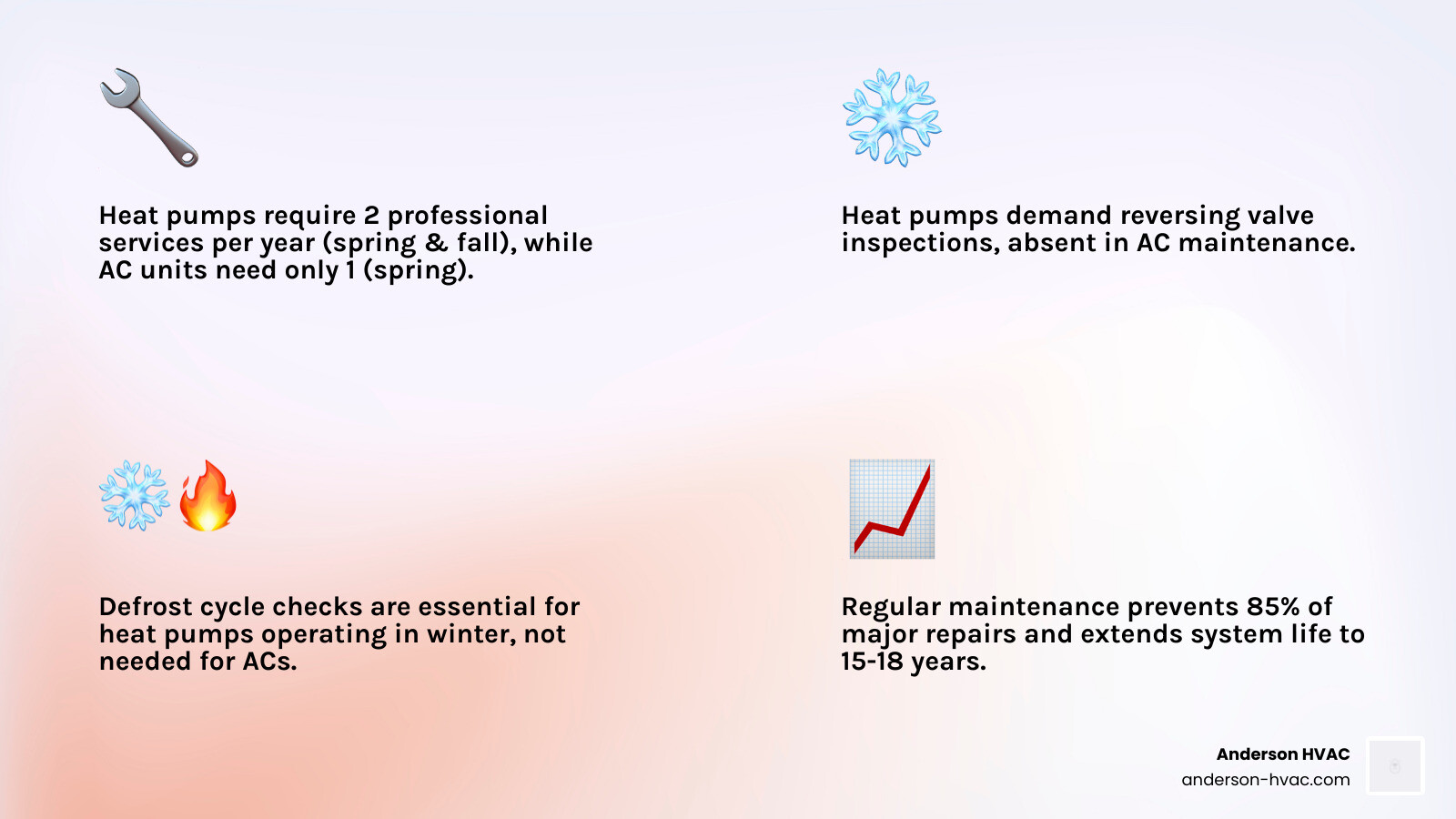
Heat pump maintenance vs ac maintenance differences come down to one core fact: heat pumps work year-round, while central AC units rest for half of it. That extra workload changes how often each system needs attention — and what a technician checks when they show up.
Here is a quick breakdown before we dive deeper:
| Feature | Heat Pump | Central AC |
|---|---|---|
| Professional service visits | 2x per year (spring & fall) | 1x per year (spring) |
| Cooling season maintenance | Yes | Yes |
| Heating season maintenance | Yes | No |
| Reversing valve inspection | Yes | No |
| Defrost cycle check | Yes | No |
| Filter changes | Every 1–3 months | Every 1–3 months |
| Shared tasks | Coil cleaning, refrigerant check, electrical inspection, fan lubrication | Same |
Both systems move heat using refrigerant — they do not generate hot or cold air on their own. That shared technology means a lot of their maintenance tasks overlap. But a heat pump also heats your home in winter, which means it never really gets a break. An AC sits idle from October through April. A heat pump does not.
That difference has real consequences. Studies show that 70 to 80 percent of heat pump repairs happen to systems that never receive regular checkups. Regular maintenance can prevent up to 85 percent of major repairs and help a well-maintained system last 15 to 18 years — compared to just 10 to 12 years for a neglected one.
If you live in North Ogden or anywhere across Northern Utah, understanding these differences helps you protect your investment and avoid a breakdown on the coldest night of January.
Shared Foundations: What Both Systems Need for Peak Performance
While we often focus on the heat pump maintenance vs ac maintenance differences, it is important to remember that these systems are essentially cousins. They both rely on a vapor compression cycle to move heat from one place to another. Because they share the same mechanical “DNA,” they also share several critical maintenance requirements.
Air Filters: The First Line of Defense
Whether you have a heat pump or a traditional air conditioner, the air filter is the most vital component you can manage yourself. Dirty filters are responsible for at least one-third of all HVAC service calls. When a filter is clogged with dust and pet dander, your system has to work significantly harder to pull air through, which can lead to overheating and even frozen coils. We recommend checking your filters monthly and replacing them every 30 to 90 days.
Coil Cleaning and Efficiency
Both systems utilize indoor evaporator coils and outdoor condenser coils. Over time, these coils collect dirt, grass clippings, and pollen, which act like an insulating blanket. This “blanket” prevents the refrigerant from efficiently absorbing or releasing heat. According to the Anderson Hvac Energy Efficient Review 101, a well-maintained system runs 10% to 25% more efficiently than a neglected one. Keeping those coils clean is a huge part of that efficiency gain.
Refrigerant Levels and Electrical Integrity
Refrigerant is the lifeblood of your cooling and heating system. During a professional visit, we check for leaks and ensure the levels are exactly where the manufacturer specifies. Low refrigerant doesn’t just make your home less comfortable; it can cause permanent damage to the compressor, which is the most expensive part of the unit. Similarly, we inspect electrical connections, capacitors, and relays. In Northern Utah, temperature swings can cause wires to expand and contract, leading to loose connections that might spark or fail.
Condensate Drains and Fan Motors
As your system cools, it removes humidity from the air. This moisture collects in a condensate drain. If this line gets clogged with algae or debris, it can back up and cause water damage to your home or trigger a safety switch that shuts your system down entirely. We also take the time to lubricate fan motors and bearings. A small amount of oil prevents friction, which reduces wear and keeps the system quiet. For those looking for comprehensive care, you can find more info about air conditioning services here.
Key Heat Pump Maintenance vs AC Maintenance Differences
To truly understand the heat pump maintenance vs ac maintenance differences, we have to look at the unique hardware that allows a heat pump to perform its “magic.” While an AC is a one-way street (moving heat out), a heat pump is a two-way highway.
| Maintenance Task | Heat Pump | Air Conditioner |
|---|---|---|
| Service Frequency | Bi-Annual (Spring & Fall) | Annual (Spring) |
| Reversing Valve Test | Required | N/A |
| Defrost Cycle Test | Required | N/A |
| Auxiliary Heat Check | Required | N/A (Handled by Furnace) |
| Solenoid Inspection | Required | N/A |
| Outdoor Unit Clearance | Critical for Snow/Ice | Critical for Airflow |
The Reversing Valve and Solenoid
The most significant mechanical difference is the reversing valve. This component is what allows the refrigerant to change direction. When you switch from cooling to heating, a small electrical component called a solenoid activates the valve. If this valve gets stuck or the solenoid fails, your heat pump might get “trapped” in one mode. Testing this valve is a standard part of our heat pump service but isn’t necessary for AC units.
The Defrost Cycle
In the winter, a heat pump’s outdoor coils can actually drop below freezing, causing frost or ice to build up. To prevent the unit from turning into a block of ice, the system has a defrost control board. This board occasionally tells the system to switch back into “cooling mode” for a few minutes to send warm refrigerant to the outdoor coils and melt the ice. Ensuring this cycle works correctly is a winter-readiness task unique to heat pumps. You can learn more info about heating services to see how we handle these specialized checks.
Understanding heat pump maintenance vs ac maintenance differences in workload
The biggest reason for the frequency difference is simply the “workload.” Think of your HVAC system like a car. If you only drive your car in the summer, you might only need one oil change a year. But if you use that same car to commute every single day, through summer heat and Utah snow, you’re going to need service much more often.
- Double Duty: A heat pump works 365 days a year. It provides cooling in July and heating in December.
- Seasonal Rest: A central AC unit gets a “vacation” during the winter while your furnace or fireplace takes over the heavy lifting.
- Component Wear: Because it never stops, the compressor and fan motor in a heat pump accumulate twice the “mileage” of an AC unit in the same amount of time.
- Compressor Strain: Starting and stopping in extreme temperatures (both hot and cold) puts more strain on a heat pump’s compressor than a seasonal AC unit ever experiences.
For homeowners in locations like Layton, Kaysville, or Syracuse, this year-round operation makes professional oversight a necessity. You can find more info about residential HVAC services to help manage this constant workload.
Seasonal Timing for heat pump maintenance vs ac maintenance differences
Timing is everything when it comes to HVAC health. For a standard air conditioner, a single spring tune-up is usually sufficient to ensure it’s ready for the first triple-digit day in July.
However, for a heat pump, we recommend a bi-annual schedule:
- Spring Tune-Up: Focuses on the cooling side—cleaning coils, checking refrigerant, and ensuring the system can handle the heat.
- Fall Readiness: Focuses on the heating side—testing the reversing valve, checking the defrost cycle, and inspecting the auxiliary heat strips that kick in when temperatures drop below freezing.
Warning Signs and Long-Term Benefits of Regular Upkeep
Regardless of which system you have, your equipment will usually try to tell you when something is wrong. Ignoring these signs can lead to the “50 percent rule”—where the repair cost is more than half the value of a new system.
Warning Signs to Watch For
- Unusual Noises: Banging, rattling, or hissing are never good signs. In a heat pump, a loud “clunk” when switching modes could indicate a failing reversing valve.
- Short Cycling: If your system turns on and off every few minutes without reaching the desired temperature, it’s likely overheating or has a sensor issue.
- Energy Bill Spikes: If your utility bills in South Ogden or Riverdale suddenly skyrocket without a change in weather, your system is likely losing efficiency due to dirty coils or low refrigerant.
- Ice Buildup: While a little frost is normal on a heat pump in winter, a thick layer of ice that doesn’t melt indicates a failure in the defrost cycle.
The Long-Term Payoff
Regular maintenance is a profit-generating activity for homeowners. A well-maintained heat pump uses 10% to 25% less energy than a neglected one. Furthermore, most manufacturers require documented professional maintenance to keep your warranty valid. If a major part fails in year five, but you haven’t had a pro look at it since installation, you might find yourself paying out of pocket for a part that should have been covered.
Preventative care prevents roughly 85 percent of major repairs. By spending a little on a tune-up now, you avoid the stress and expense of emergency repairs during a blizzard or a heatwave. For residents in Brigham City or West Haven, keeping a consistent schedule is the best way to ensure HVAC maintenance translates into long-term savings.
Frequently Asked Questions about HVAC Maintenance
How often should I service a heat pump versus an air conditioner?
An air conditioner typically requires professional service once a year, ideally in the spring. A heat pump requires service twice a year—once in the spring for the cooling components and once in the fall for the heating components. This is because the heat pump does not have an “off-season” and accumulates wear and tear much faster. If you’ve noticed your heating isn’t quite right, you can check out more info about heating repair.
What unique components are checked during heat pump service?
During a heat pump service, we specifically test the reversing valve and its solenoid to ensure the system can switch between modes. we also check the defrost control board and sensors to make sure the unit won’t freeze up in the winter. Finally, we inspect the outdoor unit for proper clearance from snow and debris, which is less of a concern for AC units that aren’t running in the winter. If your cooling side is acting up, we offer more info about AC repair as well.
Can regular maintenance really lower my monthly energy bills?
Yes! Efficiency is all about airflow and heat transfer. When your coils are clean and your filters are fresh, the system doesn’t have to run as long to reach your thermostat setting. This can lead to a 10% to 25% reduction in energy usage. Additionally, optimizing your indoor air quality ensures that your home stays comfortable at higher or lower temperatures, further reducing the strain on your equipment.
Conclusion
At Anderson HVAC, we’ve spent over 40 years serving the Northern Utah community, from the quiet streets of Huntsville to the growing neighborhoods of West Point. As a family-owned business, we understand that your home’s comfort isn’t just about machinery—it’s about the people inside.
Whether you are navigating the heat pump maintenance vs ac maintenance differences for the first time or you’ve lived with your system for a decade, we are here to provide the personalized, dependable service you deserve. From North Ogden to Syracuse, we treat every home like it’s our own, ensuring your system runs efficiently, safely, and for as long as possible.
Don’t wait for your system to fail when you need it most. Schedule your professional maintenance today and experience the peace of mind that comes with over four decades of local expertise.

