


Is Your AC Ready for Summer? What Northern Utah Homeowners Need to Know
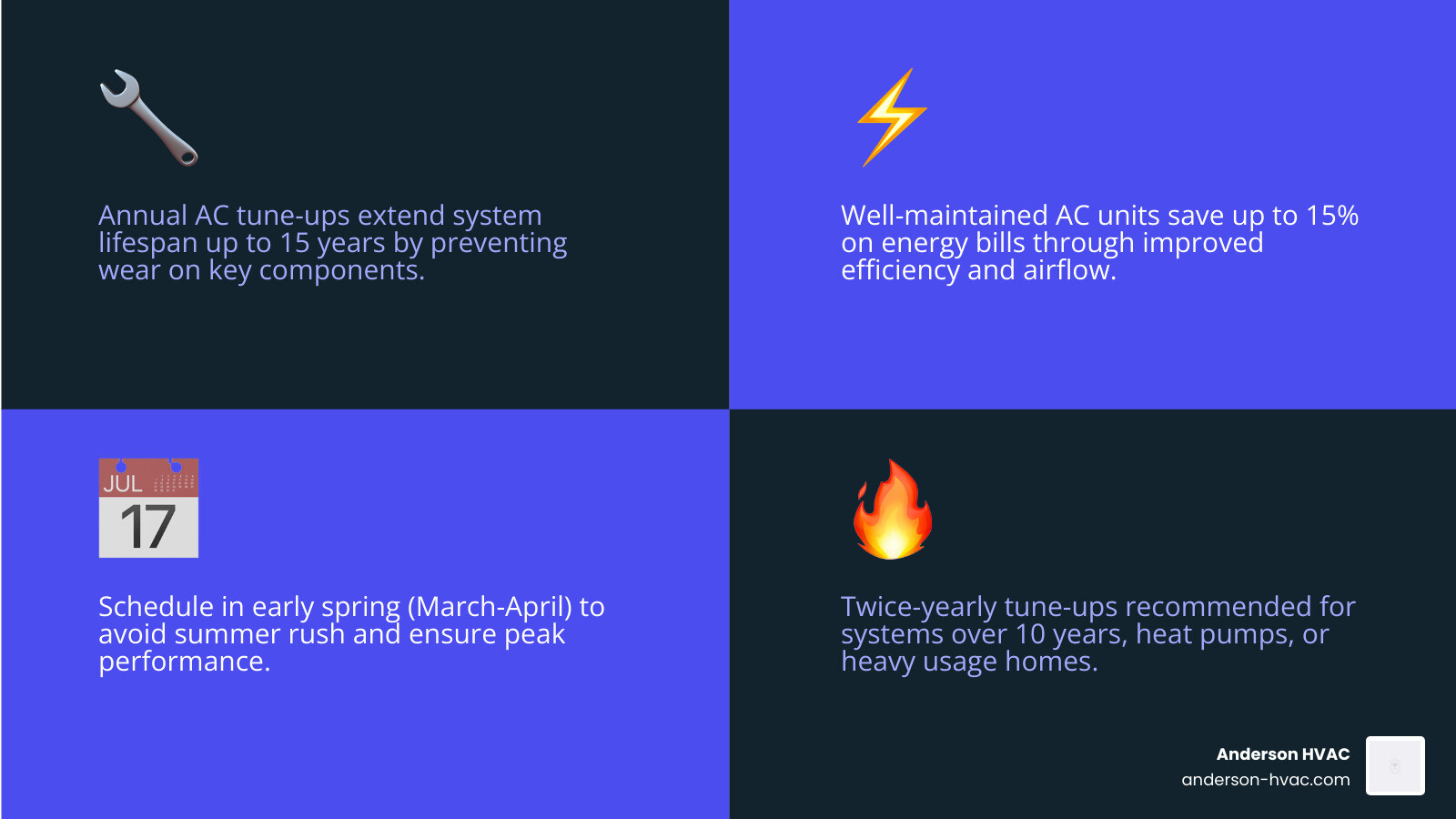
How often should you schedule an AC tune up is one of the most common questions homeowners ask — and the short answer is: once a year, ideally in early spring.
Here’s a quick breakdown:
| Situation | Recommended Frequency |
|---|---|
| Standard home, system under 10 years old | Once per year (spring) |
| System 10-15+ years old | Twice per year |
| Home with pets or allergy sufferers | Twice per year |
| Heat pump (year-round use) | Twice per year (spring + fall) |
| Hot climate or heavy usage | Twice per year |
For most homeowners in North Ogden and across Northern Utah, that means booking your tune up in March or April — before the summer heat arrives and before technicians are slammed with emergency calls.
Think of it like an annual checkup for your car. Everything might seem fine on the surface, but a trained technician can spot worn parts, low refrigerant, or electrical issues that quietly chip away at your system’s efficiency and lifespan. Skipping that yearly visit means small problems have time to grow into expensive breakdowns — usually on the hottest day of the year.
A well-maintained AC can last up to 15 years and save you up to 15% on monthly energy bills. Neglected systems? They often fail well before that, leaving you with a repair bill or a full replacement that could have been avoided.
How Often Should You Schedule an AC Tune Up for Your Northern Utah Home?
For the vast majority of households in our neck of the woods, the gold standard is a professional inspection once every calendar year. This isn’t just a suggestion from the HVAC industry; it is a technical requirement for keeping a complex machine running in a climate that swings from freezing winters to blistering summers.
When we talk about how often should you schedule an AC tune up, we have to consider the stress the system undergoes. In Northern Utah, your air conditioner sits idle for several months during the winter. During this time, dust settles, seals can dry out, and small critters might even decide your outdoor unit looks like a cozy place to hibernate. Starting that system up in June without a checkup is asking for trouble.
Furthermore, most major manufacturers require documented professional maintenance to keep your equipment warranty valid. If a major component like a compressor fails, the manufacturer may ask for service records to prove the failure wasn’t caused by neglect. Regular maintenance services ensure that your system remains compliant with these guidelines while maximizing your home’s comfort.
Why Heat Pumps Require More Frequent Maintenance
If your home utilizes a heat pump rather than a traditional central AC and furnace combo, the rules of the game change slightly. Because a heat pump provides both heating and cooling, it works hard all year round. It doesn’t get a “vacation” in the winter.
Heat pumps rely on a reversing valve to switch between modes and a defrost cycle to keep the outdoor coils from icing over in the winter. Because these systems have more moving parts that operate 365 days a year, we recommend professional service twice a year—once in the spring for the cooling side and once in the fall for the heating side. This ensures the reversing valve is functioning and the refrigerant levels are perfect for the upcoming season. For those looking at modern efficiency, ductless HVAC solutions also benefit greatly from this bi-annual attention.
When to Consider a Tune Up Twice a Year
Even if you have a standard central air conditioner, once a year might not be enough under certain conditions. As systems age, typically into the 10-15 year range, components become more brittle and prone to drifting out of their intended electrical ranges. An older motor or capacitor can fail much faster than a new one, making a mid-season checkup a smart investment to prevent a total system collapse.
Lifestyle factors also play a massive role. Do you have multiple pets that shed? Do family members suffer from severe Utah pollen allergies? High levels of pet dander and dust can clog coils and filters much faster than normal. In these high-usage or high-stress environments, a second visit can help maintain the system’s efficiency. You can learn more about how usage impacts your equipment in our Anderson Hvac Energy Efficient Review 101.
The Best Time of Year to Schedule Your Cooling Service
Timing is everything. While you can schedule a tune up in the middle of July, it’s not the most strategic move. The best time to schedule is early spring—specifically March or April.
By scheduling early, you beat the “summer rush.” Once the first 90-degree day hits Northern Utah, our phones ring off the hook with emergency repairs. If you wait until then, you might have to wait days for an appointment. By being proactive, you ensure your home is the first one cooled when the heat arrives. Scheduling early also gives you plenty of time to address any small repairs found during the inspection without the pressure of a heatwave. This proactive approach helps you don’t lose your cool with Farmington AC repair needs or service in any of our surrounding communities.
Preparing for the First Heat Wave in Ogden
There is a specific phenomenon we see every year: the “First Hot Day Failure.” This happens when a system that has been dormant for six months is suddenly asked to run at 100% capacity for 12 hours straight. If there is a weak capacitor or a slightly low refrigerant charge, the system will likely fail within the first few hours of peak demand.
Early detection is the only way to prevent this. A spring tune up identifies these “hidden” weaknesses while the weather is still mild. It’s much better to find a failing part in April when you can simply open a window than in July when your home feels like an oven. This is especially critical if you are considering whether your current unit can handle another season or if it’s time for an AC replacement in Huntsville UT.
Protecting Your Manufacturer Warranty
Most homeowners don’t realize that their 10-year parts warranty is often conditional. If you read the fine print from brands like Lennox, Carrier, or Trane, you’ll find that they require annual professional maintenance.
If your system’s compressor dies in year seven, the manufacturer may require proof of annual service before they ship a replacement part. Without that documentation, you could be on the hook for the entire cost of the repair. Consistent professional service is your insurance policy against these massive expenses. Whether it’s a new AC installation in Clinton or an older unit in Layton, keeping those records is vital.
What to Expect During a Professional AC Tune Up
A professional tune up is far more than just a quick glance at your unit. It is a comprehensive, multi-point technical inspection designed to restore your system to its factory-fresh performance levels.
When our technicians arrive at your home in Clearfield or Syracuse, they perform a series of tests that a homeowner simply cannot do without specialized equipment. This includes measuring the “draw” of your motors to ensure they aren’t overworking, checking the “subcooling” and “superheat” of your refrigerant to ensure the charge is exact, and testing all safety controls. This level of detail is why AC repair in Clearfield UT is such a breath of fresh air for local residents.
Essential Cleaning and Lubrication
Two of the biggest enemies of your air conditioner are dirt and friction. During a tune up, we focus heavily on:
- Evaporator and Condenser Coils: Dirt on these coils acts as an insulator, preventing the system from absorbing and releasing heat. Cleaning them can immediately improve efficiency by up to 15%.
- Blower Motor and Moving Parts: We check for proper lubrication. Without it, metal-on-metal friction leads to overheating and motor burnout.
- Condensate Drain Line: We clear out algae and debris that can cause water to back up and flood your basement or closet.
Proper cleaning keeps your system running smoothly and is a core part of Brigham City AC repair strategies that keep your wallet full.
Complementary Homeowner Maintenance Tasks
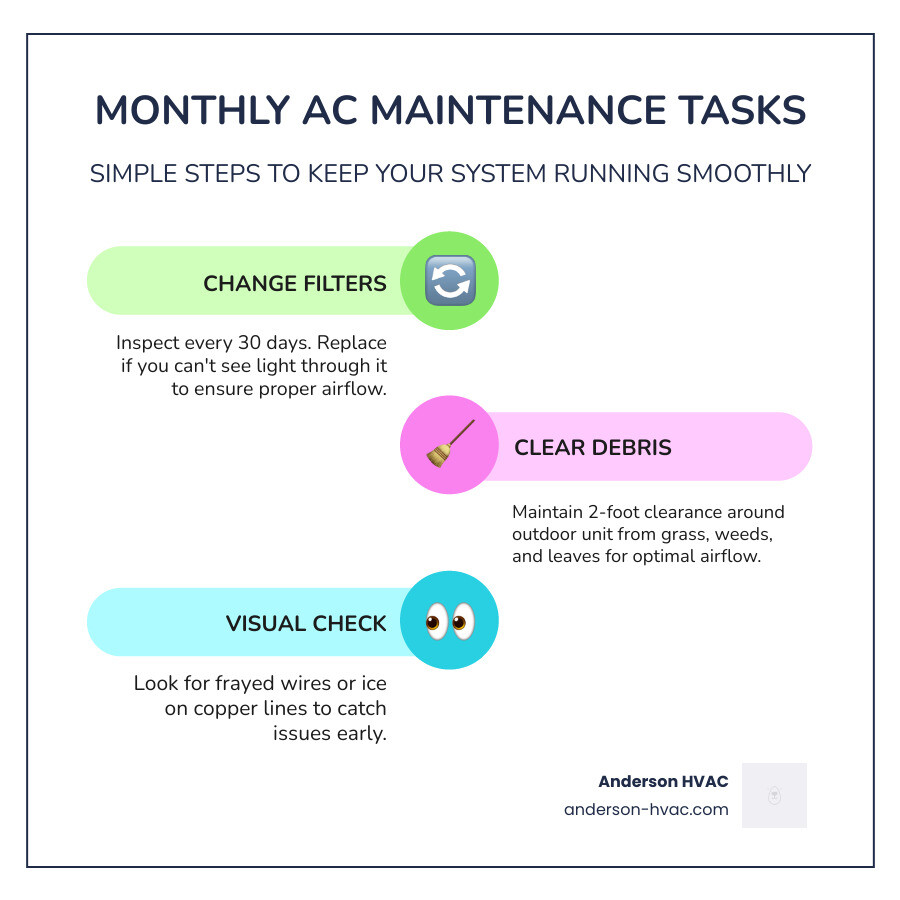
While professional service is required annually, there are several things you should do monthly to keep the system happy:
- Change Your Filters: This is the #1 thing you can do. Check them every 30 days. If you can’t see light through the filter, replace it.
- Clear Debris: Keep the area around your outdoor unit clear of tall grass, weeds, and fallen leaves.
- Visual Inspection: Look for frayed wires or ice forming on the copper lines.
Signs You Need an AC Tune Up Sooner Than Scheduled
Sometimes your air conditioner will tell you it’s struggling before its scheduled anniversary. If you notice any of the following, don’t wait for your spring appointment:
- Unusual Noises: Squealing, banging, or grinding sounds usually indicate a belt or motor issue.
- Weak Airflow: If the air coming out of the vents feels like a faint whisper, you may have a clogged coil or a dying blower motor.
- Rising Bills: If your energy costs are spiking but your usage hasn’t changed, your system is likely working twice as hard to produce the same amount of cooling.
- Warm Air: If the air isn’t icy cold, your refrigerant levels might be low.
Addressing these signs early can save you from needing more extensive Farr West AC repair later on.
How often should you schedule an ac tune up if you notice odors?
If you notice a musty or “dirty sock” smell when the AC turns on, you shouldn’t wait. This often indicates mold or bacterial growth on the evaporator coil or in the condensate pan. Because Northern Utah can have humid spells, moisture can sit in the system and become a breeding ground for spores. This isn’t just a comfort issue; it’s an indoor air quality issue that can affect your family’s health.
How often should you schedule an ac tune up for older units?
As a system crosses the 10-year mark, its efficiency naturally begins to decline. An unserviced AC can lose about 5% of its efficiency every single year. For older units, we often recommend a “pre-summer” and a “mid-summer” check to ensure the aging components can handle the peak August heat.
| System Age | Recommended Maintenance Frequency |
|---|---|
| 1-5 Years | Once per year (Spring) |
| 6-10 Years | Once per year (Strictly) |
| 11-15 Years | Twice per year (Spring & Mid-Summer) |
| 16+ Years | Twice per year (Evaluate for replacement) |
Frequently Asked Questions about AC Maintenance
Can I skip a year if my AC is working well?
We strongly advise against it. Many AC issues are “silent killers.” For example, a capacitor (the “battery” that starts your motor) can be 90% failed but still start the unit. A technician can measure this and replace it for a small amount before it dies and takes the expensive motor with it. Skipping a year also puts your warranty at risk.
Does maintenance really lower my energy bills?
Yes! Statistics show that regular tune ups can save up to 15% on monthly energy bills. Over a 15-year period, even a small $10 monthly saving adds up to $1,800—which often pays for the maintenance itself and then some.
How long does a professional tune up take?
A thorough, professional tune up typically takes between 60 and 90 minutes. This gives the technician enough time to clean the coils, test all electrical connections, calibrate the thermostat, and verify the refrigerant charge.
Trust the Northern Utah Experts at Anderson HVAC
For over 40 years, our family-owned team at Anderson HVAC has been keeping Northern Utah comfortable. We understand the specific challenges of our local climate, from the dust of the valley to the unique needs of homes in the canyon. Whether you are in North Ogden, Kaysville, or West Point, we treat your home like our own.
Don’t wait for the first heatwave to find out your system is struggling. Being proactive with your maintenance is the best way to ensure a cool, stress-free summer for your family.

