


Why Knowing Common Heat Pump Problems and How to Prevent Them Saves You Money and Stress
Common heat pump problems and how to prevent them come down to a handful of recurring issues that most Northern Utah homeowners will face at some point — and nearly all of them are avoidable with the right habits.
Here are the most common heat pump problems and how to prevent them:
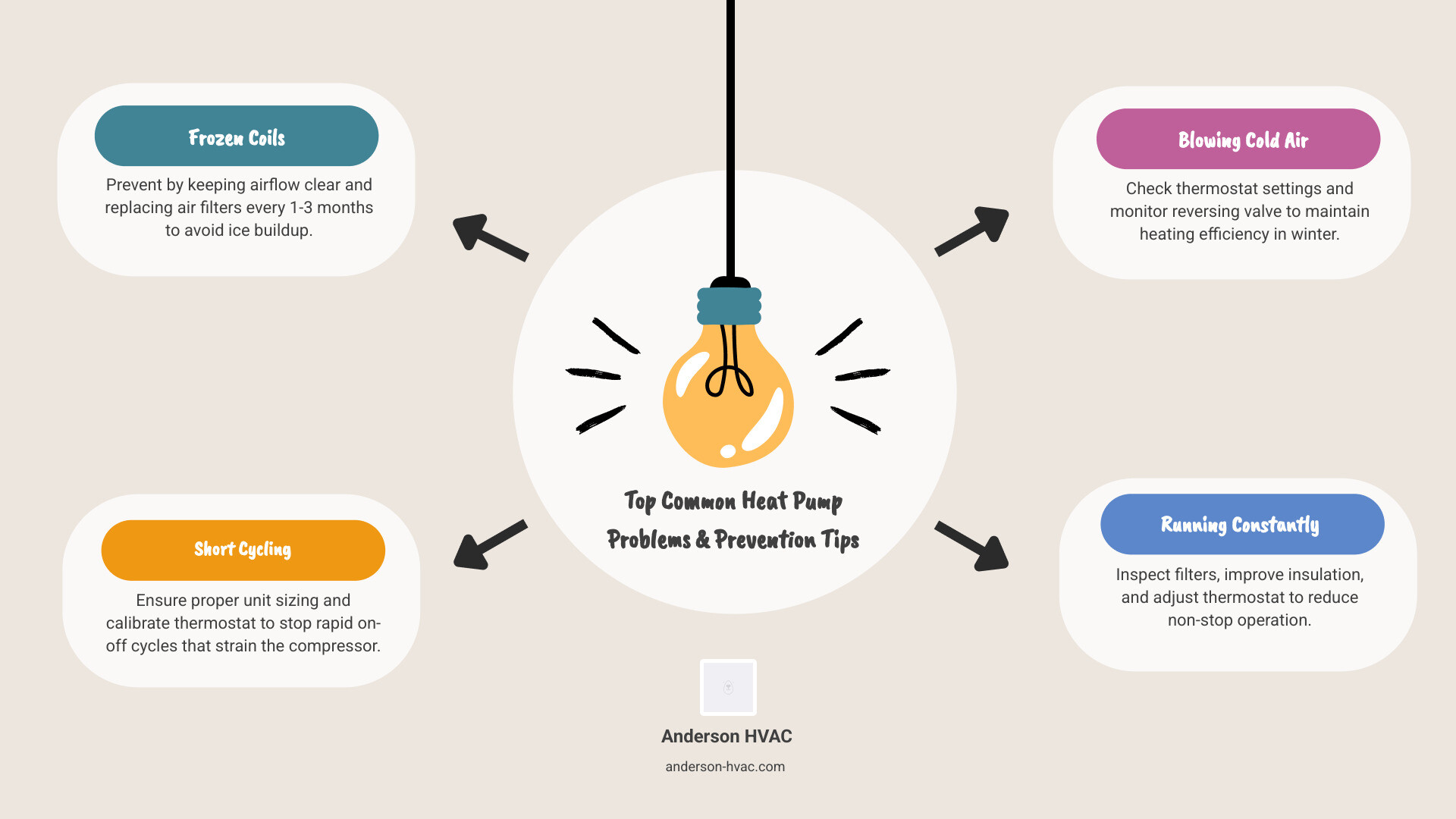
- Frozen outdoor coils – Keep airflow clear and replace filters every 1-3 months
- Short cycling – Ensure your unit is properly sized and your thermostat is calibrated correctly
- Blowing cold air in heating mode – Check thermostat settings and watch for reversing valve issues
- Running constantly – Inspect filters, insulation, and thermostat settings
- Strange noises – Address grinding, squealing, or rattling sounds immediately with a professional
- Refrigerant leaks – Schedule annual professional inspections to catch leaks early
- Unit won’t power on – Check the circuit breaker, thermostat, and air filter before calling for help
Heat pumps are one of the most efficient ways to keep your home comfortable through Northern Utah’s cold winters and hot summers. But like any hardworking system, they can run into trouble — and nearly 30% of heat pump owners report insufficient heating or cooling as their top complaint. The good news? Most of these problems follow predictable patterns. That means with a little awareness and routine care, you can stop the majority of breakdowns before they ever happen.
Whether your system is short cycling on a cold January night in North Ogden or struggling to cool your home during a July heat wave, understanding what goes wrong — and why — puts you in control. This guide walks you through the most common failures, what causes them, and the simple steps that keep your heat pump running strong year after year.
Identifying Common Heat Pump Problems and How to Prevent Them
In May 2026, as we look at modern HVAC technology, heat pumps remain the gold standard for efficiency. However, even the most advanced systems can experience hiccups. One of the most frustrating issues is short cycling, where the unit turns on and off rapidly. This doesn’t just make your home uncomfortable; it places immense strain on the compressor and can significantly shorten the unit’s 15-year average lifespan.
Another frequent headache is ice buildup on the outdoor unit. While a light frost is normal during a North Ogden winter, a solid block of ice indicates a failure in the defrost cycle or restricted airflow. When airflow is blocked, your system has to work twice as hard to move heat, leading to higher energy bills and potential mechanical failure. If your system is already struggling, you can find more info about heating repair services to get things back on track.
Simple Checks for Common Heat Pump Problems and How to Prevent Them
Before you assume the worst, there are several “low-tech” checks that can resolve many common issues.
- Thermostat Settings: It sounds simple, but ensure your thermostat is set to the correct mode (Heat or Cool) and that the fan is set to “Auto” rather than “On.” If the batteries are dead, the thermostat can’t communicate with the heat pump.
- Power Supply: Check your electrical panel. A tripped circuit breaker is a common culprit when a unit won’t power up.
- Air Filters: This is the big one. A dirty filter is the root cause of roughly half of all HVAC service calls. It restricts airflow, causes coils to freeze, and makes the motor overheat.
To keep your system healthy, we recommend a simple monthly checklist:
- Check and/or replace the air filter every 1–3 months.
- Inspect outdoor vents and indoor registers to ensure they aren’t blocked by furniture or rugs.
- Verify that the thermostat is showing the correct time and temperature.
- Listen for any new or unusual sounds during startup.
Seasonal Care for Common Heat Pump Problems and How to Prevent Them
Living in Northern Utah means our heat pumps deal with everything from spring blossoms to heavy winter snow. In areas like Huntsville or Morgan, snow accumulation can quickly bury an outdoor unit. If the unit can’t “breathe,” it can’t transfer heat.
During the fall, keep leaves and grass clippings at least 2 to 3 feet away from the outdoor condenser. In the winter, gently clear away snow and check for ice dams from leaky gutters dripping onto the unit. Regular coil cleaning is also essential; dirt and grime act as an insulator, preventing the refrigerant from doing its job. For those who want to ensure their system is ready for the peak season, you can find more info about HVAC maintenance to prevent these seasonal stresses.
Why Systems Blow Cold Air or Run Constantly
If it’s a frigid night in Brigham City and your heat pump is blowing cold air, don’t panic yet. It might be in defrost mode. This is a normal cycle where the unit temporarily reverses to melt ice off the outdoor coils. However, if the air stays cold for more than 15 minutes, you might have a stuck reversing valve or a refrigerant leak.
Refrigerant leaks are serious. Because heat pumps are sealed systems, any loss of refrigerant means there is a hole or a crack that needs professional repair. Running a system low on refrigerant will eventually destroy the compressor. If you notice your system is blowing warm air when it should be cooling, you can find more info about air conditioning repair to address the leak before it escalates.
Understanding System Cycles and Temperature Shifts
Modern heat pumps often utilize auxiliary heat (heat strips) when the outdoor temperature drops significantly. While this keeps you warm, it is less efficient than the standard heat pump cycle. To optimize this, many homeowners are switching to smart thermostats. Statistics show that a smart thermostat designed for heat pumps can save up to 23% on energy costs by managing these cycles more effectively.
| Feature | Normal Defrosting | System Icing (Problem) |
|---|---|---|
| Appearance | Light frost or thin ice | Solid “igloo” of ice covering coils |
| Duration | 5 to 15 minutes | Constant ice that never melts |
| Steam/Noise | May see steam and hear a “whoosh” | Loud grinding or silence from the fan |
| Air Temp | Temporary cool air indoors | Constant cold air in heat mode |
Managing Noises and Electrical Failures
Your heat pump shouldn’t sound like a freight train. While some humming and the occasional “whoosh” of the reversing valve are normal, other sounds are red flags.
- Grinding: Usually indicates that the motor bearings are worn out.
- Squealing: Often a sign of a failing fan motor or a slipping belt in older units.
- Hissing: This is almost always a sign of a refrigerant leak.
- Clicking: If you hear rapid clicking but the unit won’t start, your starter capacitor might be failing.
Addressing these sounds early is one of the best ways to practice common heat pump problems and how to prevent them. A small rattling panel can be tightened in seconds, but ignoring a grinding motor can lead to a total system replacement. Beyond the mechanical parts, ensuring your ductwork is clean and clear helps reduce noise and improves the air you breathe. Check out more info about indoor air quality to see how a clean system benefits your home’s health.
Identifying Warning Signs in Key Components
The compressor is the “heart” of your heat pump and the most expensive part to replace. Warning signs of a failing compressor include hard starting, circuit breakers tripping frequently, and reduced heating or cooling capacity. Similarly, fan motors and electrical contactors can wear out over time due to Northern Utah’s temperature swings.
If you have a ductless system in a home in Kaysville or Farmington, the warning signs are similar but often involve the indoor air handler. If you notice water leaking down the wall or strange smells, it’s time to look into more info about ductless HVAC services.
Frequently Asked Questions
Why is my heat pump frozen in the winter?
In Northern Utah, freezing is often caused by a combination of high humidity and sub-freezing temperatures. However, if the ice doesn’t melt, it’s likely due to a faulty defrost sensor, a bad control board, or restricted airflow from snow and debris. Low refrigerant can also cause the coils to drop below freezing, leading to ice buildup even when it’s 40 degrees outside. For professional help with winter-specific issues, see more info about heating services.
How often should I change my heat pump filters?
We recommend checking your filters every month and replacing them at least every 1 to 3 months. If you have pets (and all that Utah dander!) or live in a high-dust area like West Haven, you may need to change them more frequently. Keeping filters clean is the single best way to extend your system’s longevity. Learn more info about air filtration to keep your air crisp and clean.
Why does my heat pump run all the time?
During extreme cold or heat waves in Syracuse or Layton, it’s normal for a heat pump to run almost constantly to maintain the set temperature. However, if it’s 50 degrees outside and the unit won’t shut off, you might have an undersized unit, poor insulation, or a thermostat that needs calibration. Ensuring your home is well-sealed helps the unit take “breaks.” For a full system evaluation, look into more info about residential HVAC services.
Conclusion
At Anderson HVAC, we’ve spent over 40 years helping our neighbors in North Ogden and throughout Northern Utah stay comfortable. Being family-owned means we treat your home like our own, and we know that a well-maintained heat pump is the key to a stress-free season. By staying on top of common heat pump problems and how to prevent them, you can enjoy lower bills, better air quality, and the peace of mind that comes with a reliable system.
Don’t wait for a breakdown to happen during the next Utah snowstorm. Schedule your professional heat pump maintenance today and let our experienced team ensure your comfort for years to come.

