


Why Understanding How Condenser Coil Damage Leads to Costly AC Repair Could Save You Thousands
How condenser coil damage leads to costly AC repair is simpler to understand than most homeowners expect — and catching it early makes all the difference. When the condenser coil in your outdoor unit gets dirty, bent, corroded, or cracked, your entire cooling system starts working against itself. Heat can’t escape properly, refrigerant pressure builds, and every other component has to work harder to keep up.
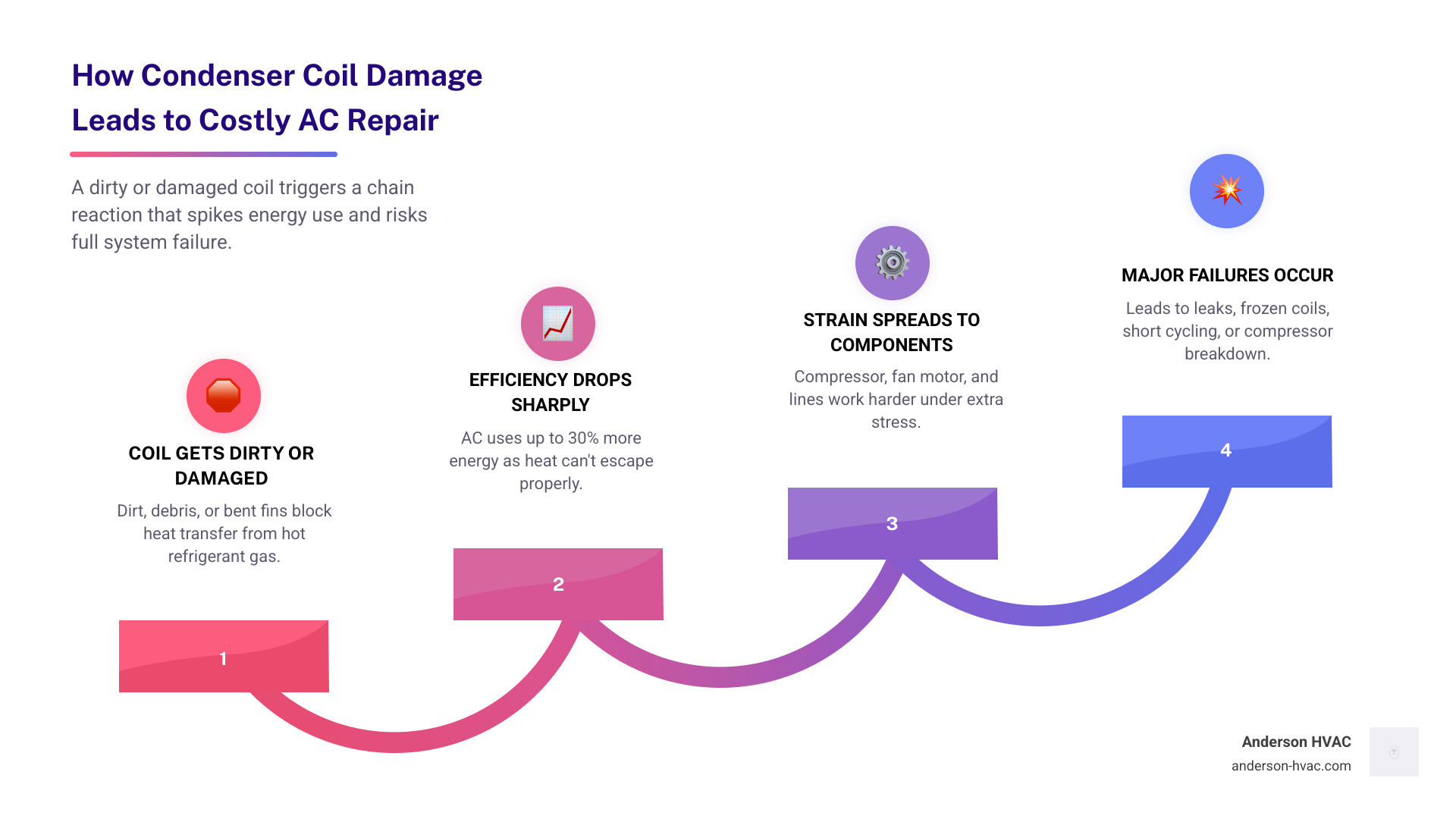
Here’s a quick look at how the damage chain unfolds:
- Coil gets dirty or damaged — dirt, debris, or physical impact blocks heat transfer
- System efficiency drops — a dirty coil can force your AC to use up to 30% more energy
- Strain spreads to other parts — the compressor, fan motor, and refrigerant lines all take on extra stress
- Bigger failures follow — refrigerant leaks, frozen evaporator coils, and short cycling become common
- Full system breakdown becomes a real risk — compressor failure or total replacement may be the end result
For homeowners in North Ogden and across Northern Utah, the stakes are especially high during the peak summer months when a working AC isn’t a luxury — it’s a necessity. A small coil problem that gets ignored in spring can turn into an emergency repair call in July.
The good news? Most of this is preventable. Understanding what damages condenser coils, what the warning signs look like, and when to call a professional can keep your AC running reliably for years.
Understanding the Role of the Condenser Coil in Your Home’s Comfort
To understand why a little bit of dirt or a few bent fins can cause such a headache, we first need to look at what that outdoor unit is actually doing. Many people think an air conditioner “creates” cold air. In reality, it is a heat relocation machine. It picks up heat from inside your home and dumps it outside.
The condenser coil is the “hot side” of this process. It consists of a long series of copper or aluminum tubes surrounded by thousands of tiny, thin metal fins. As the hot, high-pressure refrigerant gas flows through these tubes, the large outdoor fan pulls air across the fins. This air carries the heat away into the Utah sky, allowing the refrigerant to cool down, turn back into a liquid (the refrigerant phase), and head back inside to grab more heat.
When this heat dissipation is interrupted, your cooling capacity plummets. Proper airflow is the lifeblood of this cycle. If the air can’t pass through those fins freely, the heat stays trapped in the refrigerant, and your house stays warm. This is why keeping that outdoor unit clear is one of the most vital air conditioning services we provide to our neighbors in North Ogden.
Identifying the Warning Signs of Coil Failure in Northern Utah
Living in Northern Utah, we experience everything from dusty desert winds to heavy spring pollen. These environmental factors can quickly compromise your coils. But how do you know if your system is struggling?
The most obvious sign is warm air blowing from your vents. If your thermostat is set to 70 degrees but the house won’t budge past 78, your condenser is likely failing to release heat. You might also notice strange noises. A hissing sound often indicates a refrigerant leak within the coil, while a loud buzzing or clanking could mean the compressor is struggling to pump against high pressures caused by a blockage.
Another red flag is short cycling, where the AC turns on and off every few minutes. This often happens because the system is overheating and a safety switch is shutting it down to prevent a fire or total mechanical collapse. Lastly, keep an eye out for ice buildup. It sounds counterintuitive, but a problem with the outdoor condenser coil can actually cause the indoor unit to freeze solid. If you see any of these signs, seeking AC repair in Clearfield, UT or your local area is the best way to prevent a total system “meltdown.”
How condenser coil damage leads to costly ac repair through energy waste
One of the most painful ways how condenser coil damage leads to costly AC repair isn’t actually the repair bill itself — it’s the monthly electricity bill. When a coil is layered with dirt or has crushed fins, it acts like it’s wearing a heavy winter parka in the middle of a July heatwave.
This “insulating blanket” of grime forces the system to run much longer cycles to achieve the same cooling effect. Industry data shows that a dirty condenser coil can cause a system to use up to 30% more energy. In a large home in Layton or Kaysville, that can add up to hundreds of extra dollars over a single summer. Furthermore, this strain significantly reduces your system’s SEER2 (Seasonal Energy Efficiency Ratio) performance, essentially turning a high-efficiency unit into a budget-draining relic.
Why ignoring how condenser coil damage leads to costly ac repair results in compressor failure
The compressor is often called the “heart” of the AC system. It is also the most expensive part to replace. When the condenser coil is damaged, the compressor has to work at much higher temperatures and pressures than it was designed for.
This mechanical stress leads to a “ripple effect” of failure. High heat causes the internal lubricant to break down, leading to metal-on-metal grinding inside the compressor. Eventually, the high-voltage components may short out, or the compressor may simply seize up. Once the compressor fails, you are often faced with the difficult choice of a very expensive repair or replacing the entire outdoor unit. This is the ultimate example of how condenser coil damage leads to costly AC repair.
Primary Causes of Condenser Coil Deterioration
Why do these sturdy-looking metal units fail? In our 40+ years of experience at Anderson HVAC, we’ve seen a few recurring culprits. Dirt buildup is the number one enemy. In Northern Utah, we also deal with cottonwood seeds — those fluffy white tufts that look like snow in June. They act like a vacuum filter, clogging up condenser fins in a matter of days.
Corrosion is another major factor. While we don’t have salt sea air, we do have winter road salt and various industrial pollutants that can eat away at the metal. Below is a comparison of the materials typically used in our region:
| Feature | Copper Coils | Aluminum Coils |
|---|---|---|
| Heat Transfer | Excellent | Good |
| Corrosion Resistance | Moderate (subject to formicary corrosion) | High (better against salt/chemicals) |
| Durability | Very High | Moderate (fins bend easily) |
| Repairability | Easier to weld/patch | Difficult; often requires replacement |
If you suspect your unit is suffering from environmental wear, it’s worth looking into Farr West AC repair to get a professional assessment of your coil’s health.
Physical impacts and environmental hazards
Sometimes the damage isn’t gradual; it’s a sudden “oops” moment. Hail damage is common during our Utah spring storms, where ice pellets can flatten the delicate fins like a pancake. We also see plenty of “lawnmower debris” — rocks or sticks kicked up by a mower that puncture the pressurized refrigerant lines.
One of the most surprising (and smelly) causes of coil failure is pet urine. If a dog regularly marks the outdoor unit, the acidity in the urine will eat through the aluminum fins and copper tubing surprisingly fast, leading to irreparable leaks. If you’ve had a storm or a yard mishap, don’t wait to check your unit. You can find help through Farmington AC repair services to straighten those fins before the heat hits.
The Ripple Effect: How condenser coil damage leads to costly ac repair
The AC system is a delicate balance of pressures. When the “hot side” (condenser) fails, the “cold side” (evaporator) suffers too. If the condenser can’t release heat, the refrigerant doesn’t cool down properly. This can lead to a refrigerant leak as the system tries to vent excess pressure, or it can cause the indoor evaporator coil to freeze over because the cycle is completely out of whack.
This puts immense fan motor strain on both the indoor and outdoor units. The motors have to spin faster and longer to try and compensate for the lack of cooling. Eventually, you aren’t just looking at a coil cleaning; you’re looking at replacing motors, capacitors, and refilling expensive refrigerant. For those in Box Elder County, Brigham City AC repair can help catch these issues before the ripple effect drains your wallet.
Professional Maintenance and Prevention Strategies
The best way to handle how condenser coil damage leads to costly AC repair is to make sure the damage never happens in the first place. We recommend annual tune-ups every spring. During these visits, a professional can perform “fin straightening” using a specialized tool called a fin comb. This restores the airflow that was lost to hail or minor bumps.
Professional cleaning is also vital. While a homeowner can lightly hose off the unit, a pro uses specialized, non-acidic foaming cleaners that get deep into the center of the coil to push out the hidden dirt that a garden hose can’t reach. We also ensure your unit meets clearance requirements. You should have at least two feet of clear space around your unit — no shrubs, weeds, or storage bins blocking the air.
Residents looking for Clinton AC repair can testify that a little bit of prevention goes a long way. Setting up a regular HVAC maintenance plan is like an oil change for your car; it keeps the big bills away.
Frequently Asked Questions about Condenser Coils
Can I run my AC with a damaged condenser coil?
Technically, the system might still turn on, but we strongly advise against it. Running a system with a damaged coil causes a massive system imbalance. This leads to the compressor overheating, which can trigger a safety shutdown. If you force it to run, you are essentially “redlining” your AC, which significantly increases the risk of an emergency breakdown when you need the cooling most.
How often should I have my coils professionally cleaned?
For most homes in Northern Utah, once a year during your spring maintenance is sufficient. However, if you live in an area with lots of cottonwood trees, unpaved roads, or nearby construction, you might need a check-up twice a year. The Northern Utah climate is beautiful, but our dust and seasonal debris are tough on outdoor machinery.
Does a dirty coil cause the indoor unit to freeze?
Yes! This is one of the most common service calls we get. If the outdoor coil can’t release heat, the refrigerant remains at an improper temperature and pressure. This disrupts the pressure imbalance in the indoor evaporator coil, causing the condensation on the coils to turn into evaporator ice. This airflow restriction eventually blocks all cooling from entering your home.
Conclusion
At Anderson HVAC, we’ve spent over 40 years helping families in North Ogden and the surrounding Northern Utah communities stay comfortable. As a family-owned business, we know that an unexpected AC failure is more than just an inconvenience — it’s a disruption to your home and your budget.
Understanding how condenser coil damage leads to costly AC repair is the first step in taking control of your home’s comfort. Whether you are in Roy, Syracuse, or Huntsville, our team is dedicated to providing the personalized, expert service you deserve. We treat your home like our own, ensuring that every fin is straight and every coil is clean.
Don’t wait for the first triple-digit day to find out your condenser is struggling. Schedule your professional AC repair in North Ogden today and let our family take care of yours.

