



Understanding Why Your Heater is Blowing Cold Air
A heater blowing cold air is a frustrating winter problem. When you expect warmth and get a chilly breeze instead, it signals something is wrong with your furnace. For homeowners in North Ogden, UT, and surrounding areas, understanding the potential causes can help you decide if it’s a simple fix or if you need professional heating repair.
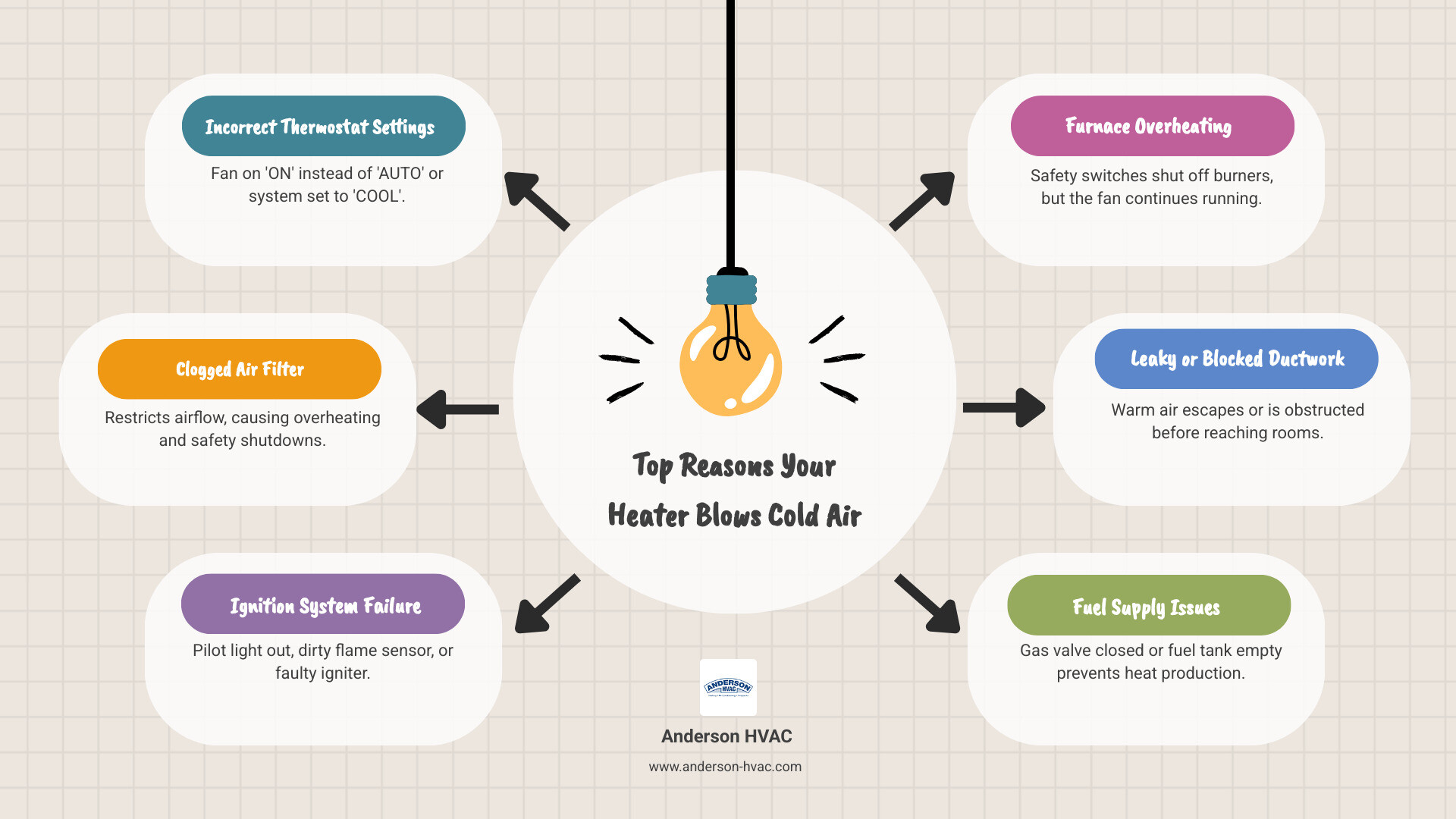
Quick Answer: Top Reasons Your Heater Blows Cold Air
- Thermostat set incorrectly – Fan is on “ON” instead of “AUTO,” or the system is set to “COOL.”
- Dirty air filter – Restricted airflow causes the furnace to overheat and shut down its burners.
- Pilot light or igniter failure – The furnace burners can’t light to produce heat.
- Furnace overheating – Safety switches turn off the burners, but the fan keeps running.
- Leaky ductwork – Heated air escapes before it reaches your rooms.
- Fuel supply issues – The gas valve is closed, or the fuel tank is empty.
- Malfunctioning components – Problems with the flame sensor, limit switch, or control board.
If you’re facing heating issues, learn more about common heating repair problems or schedule professional heating repair in North Ogden, UT for reliable service.
First Steps: Simple DIY Checks for Your Heating System
When your heater blowing cold air disrupts your comfort, don’t assume the worst. Before scheduling a repair, perform a few straightforward checks. Often, the fix is surprisingly simple and can save you time and money. For more guidance, see our 7 Basic Tips for Fixing Your Heater Like a Pro or our guide to Troubleshoot Heater That Won’t Turn On.
Check Your Thermostat Settings
Your thermostat is the command center, so start your checks here. An incorrect setting is a common reason for service calls.
- Set to “HEAT”: Ensure the system isn’t accidentally switched to “COOL” or “OFF.”
- Fan on “AUTO”: The “ON” setting makes the fan run continuously, even when the furnace isn’t heating. This circulates room-temperature air, which feels cold. “AUTO” ensures the fan only runs during a heating cycle.
- Temperature Setting: The set temperature must be higher than the current room temperature to trigger the heat.
- Batteries and Resets: If you have a battery-powered thermostat, try fresh batteries. For smart thermostats, a simple reset can often resolve software glitches or connection issues. A blank screen or unresponsive controls indicate a thermostat problem. Learn more about how a thermostat controls heating and cooling on our blog.
Inspect the Furnace Air Filter
A clogged air filter is a top cause of a heater blowing cold air and is easy to fix. The filter traps dust and debris, but when it gets too dirty, it restricts airflow, forcing your furnace to work harder.
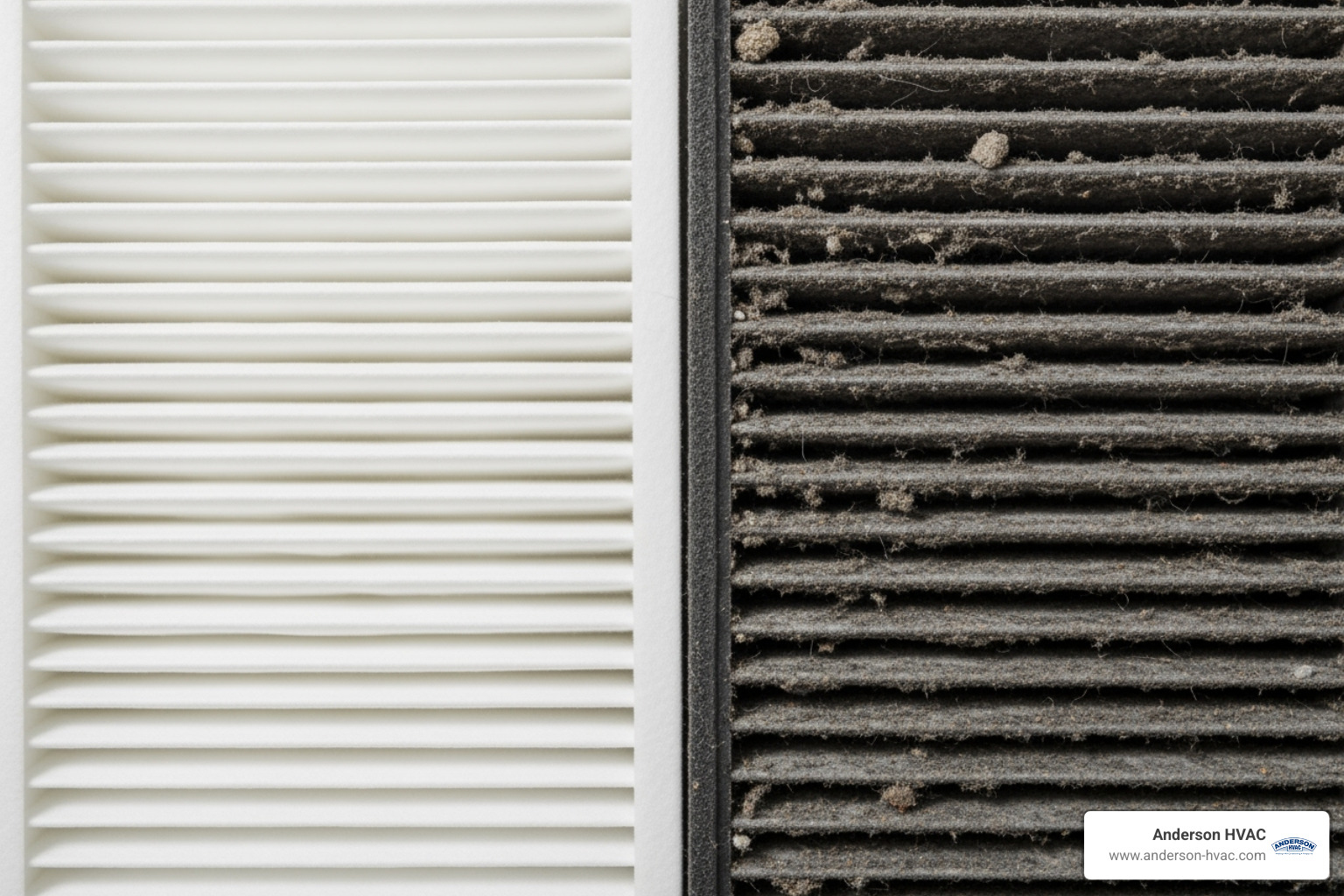
This restricted airflow can cause the heat exchanger to overheat. A high-limit switch will then shut down the burners as a safety measure, but the blower fan often keeps running, circulating unheated air. This is your furnace protecting itself from damage.
Check your filter monthly. If you can’t see light through it, it’s time for a replacement. A dirty filter can also cause weak airflow and higher energy bills. For more details, review these signs of a faulty furnace air filter. We recommend replacing filters every 1-3 months.
Wait for the Normal Warm-Up Cycle
Sometimes, your furnace is just warming up. If you feel cool air right after turning on the heat, be patient. Most modern furnaces have a blower delay to prevent an initial blast of cold air. The burners ignite first to warm the heat exchanger. Only after it reaches the right temperature—usually in 1-3 minutes—does the fan start distributing warm air.
This is normal operation. However, if you’re still getting cold air after five minutes, or the air never warms up, there is likely a problem that needs further investigation or a professional service call.
Common Causes for a Heater Blowing Cold Air
If simple DIY checks don’t solve the problem, the issue may be more complex. Problems with critical furnace components often require professional expertise to diagnose and repair safely. Understanding these potential issues can help you know when to call for help with common heating repair issues or other heating repair needs and solutions.
Ignition System and Fuel Problems
For your furnace to create heat, its ignition system must work correctly. If it fails, the burners won’t light, and the fan will only circulate cold air.
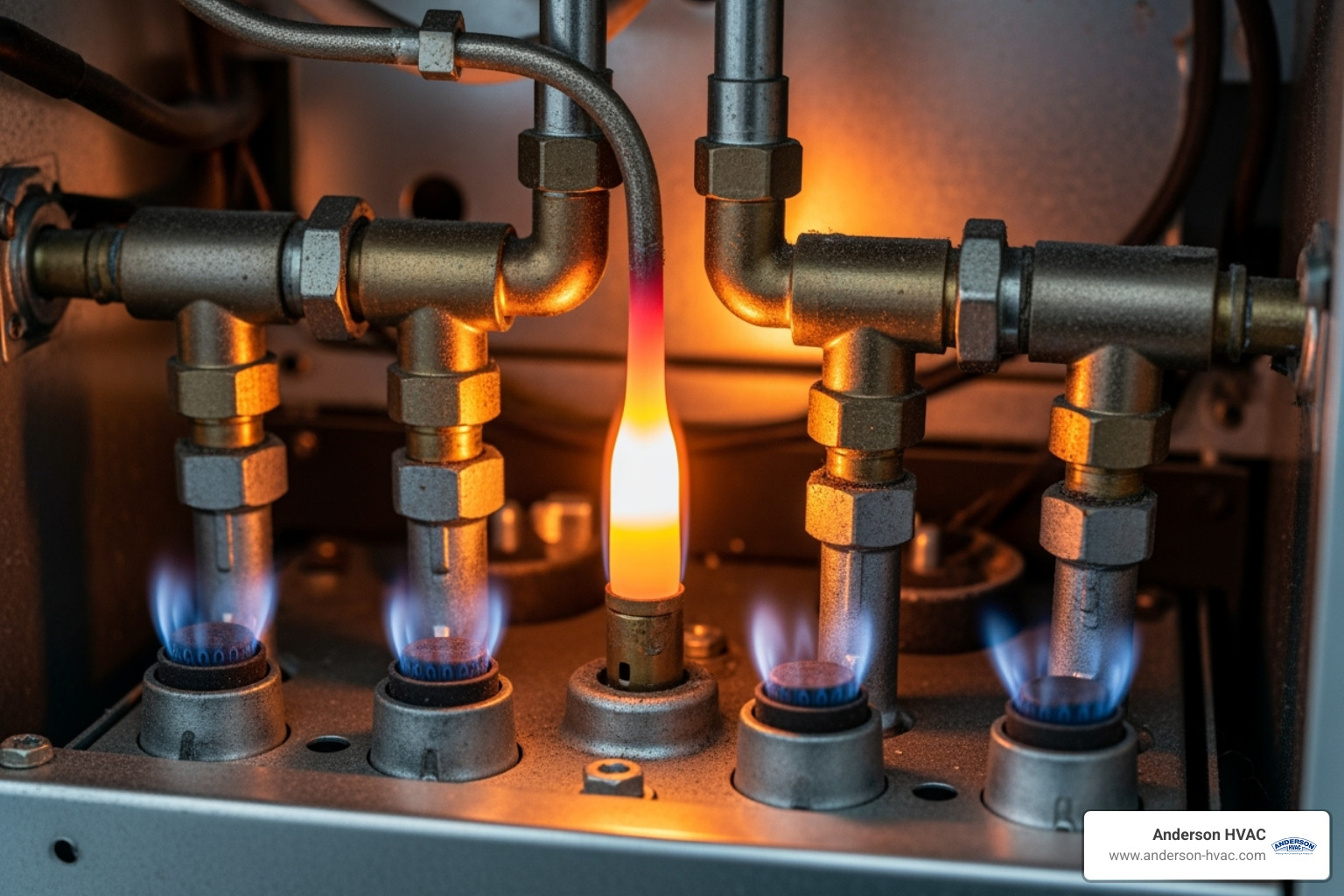
- Pilot Light (Older Furnaces): A pilot light that has gone out will prevent the main burners from igniting. This can be caused by a draft or a faulty thermocouple, a safety device that shuts off gas if it doesn’t sense the pilot flame.
- Electronic Ignition (Modern Furnaces): Newer systems use a hot surface igniter or spark igniter. If the igniter is cracked or worn out, it can’t light the gas. These systems also have a flame sensor that confirms the burners are lit. If this sensor is dirty, it can’t detect the flame and will shut off the gas as a safety precaution, causing the burners to go out.
- Fuel Supply: Ensure the gas valve to your furnace is open (parallel to the pipe). For oil furnaces, check if you have enough fuel. A neighborhood-wide gas outage could also be the cause.
If you are uncomfortable working with gas or diagnosing these components, it’s best to call a professional for heating repair issues.
Furnace Overheating and Safety Lockouts
Your furnace can get too hot, and when it does, it will blow cold air as a safety measure. A high-limit switch monitors the internal temperature. If it gets too high, the switch shuts down the burners to prevent damage or a fire. However, the blower motor often continues to run to cool the unit down, resulting in a heater blowing cold air.
This often leads to short cycling—the furnace heats up, overheats, shuts down, blows cold air, and repeats. The most common cause is a clogged air filter, but other culprits include:
- Blocked vents or return grilles: Closing too many vents or blocking air returns with furniture restricts airflow.
- A faulty blower motor: If the fan isn’t moving enough air, heat builds up.
- An oversized furnace: A unit that’s too powerful for your home will heat the space too quickly and shut off repeatedly.
Clogged Condensate Drain Lines
High-efficiency furnaces produce condensation (water) as a byproduct of their heating process. This water is removed via a condensate drain line. If this line becomes clogged with algae or debris, water backs up into a pan inside the furnace.
A float switch in the pan detects the high water level and shuts down the furnace to prevent water damage. This will stop the furnace from producing heat, and you may only feel cool air from the vents if the fan continues to run. A clogged line can lead to water leaks, mold growth, and rust, so it’s important to address it promptly. Find out more about these issues in our guide to common heating repair problems.
System-Wide Problems Affecting Heat Distribution
Sometimes the furnace is making heat, but it isn’t reaching you. In these cases, the problem lies within the wider distribution system. These issues can be tricky to diagnose and often require comprehensive HVAC solutions.
Leaky or Blocked Air Ducts
Your ductwork delivers warm air from the furnace to your rooms. If there are problems with the ducts, your comfort will suffer.
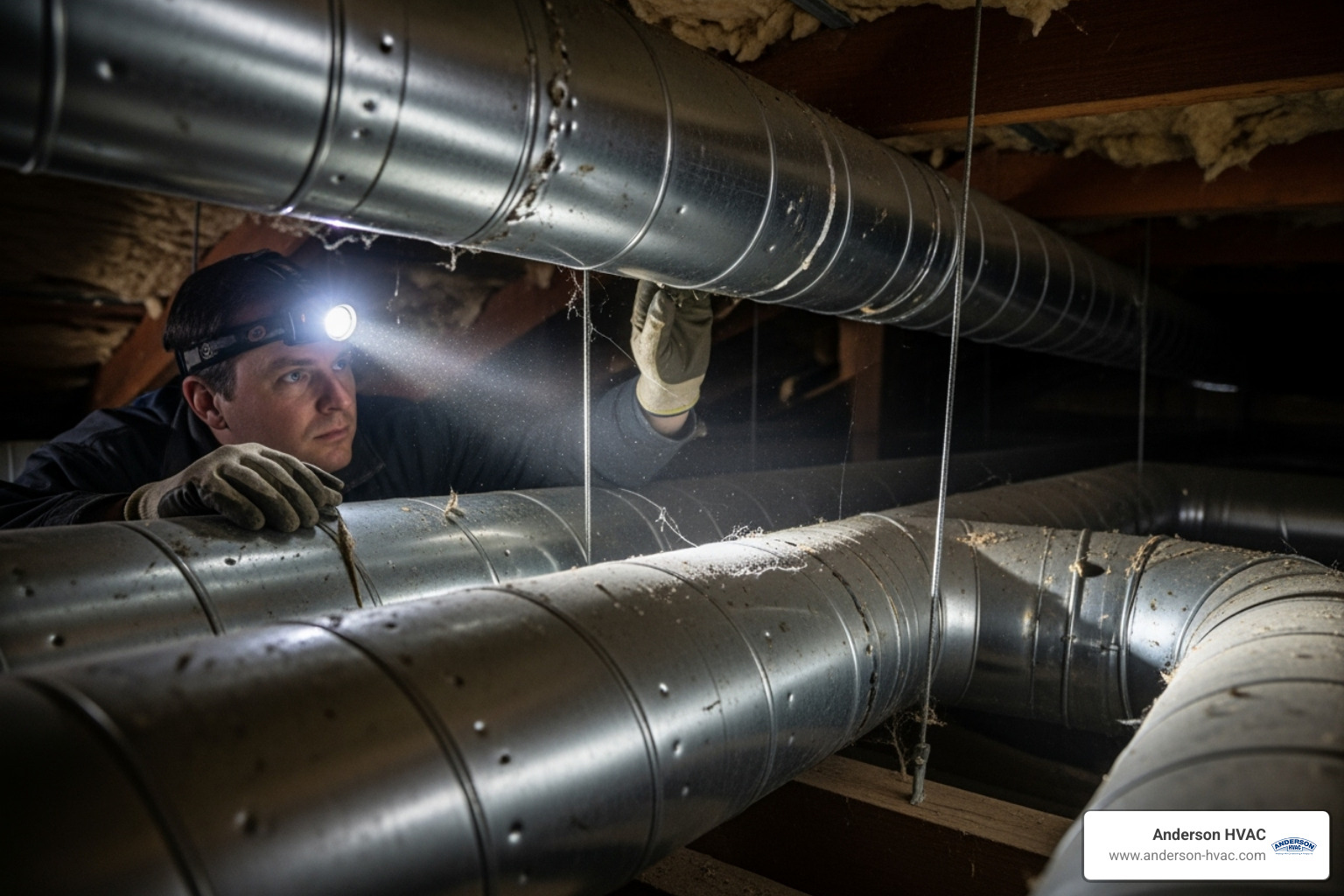
Leaky ducts with gaps or tears allow heated air to escape into attics, crawl spaces, or basements. This wastes energy, leads to higher utility bills, and causes uneven temperatures where some rooms are cold while others are comfortable. Blocked ducts, caused by collapsed sections, debris, or closed dampers, can completely stop airflow to parts of your home.
While you can visually inspect exposed ductwork for obvious tears or feel for air leaks, professional duct sealing is often required for a complete fix. If you’re unsure how to inspect ductwork for leaks, a technician can properly assess and repair your system.
The Dangers of a Cracked Heat Exchanger
This is a serious safety issue. The heat exchanger is a metal component that transfers heat from the furnace’s combustion process to the air that blows through your home, while keeping the toxic exhaust gases separate.
If the heat exchanger develops a crack from age or overheating, these gases—including deadly, odorless, and colorless carbon monoxide (CO)—can leak into your home’s air supply. CO poisoning symptoms mimic the flu (headaches, nausea, dizziness) and can be fatal. This is why working carbon monoxide detectors are essential in every home.
Modern furnaces have safety features that may shut the system down if a crack is detected, which could be a reason your furnace is blowing cold air. A cracked heat exchanger requires immediate professional attention. This is not a DIY repair. If you suspect this issue, turn off your furnace and call a professional. Our technicians know what an HVAC contractor does exactly to handle these critical safety problems.
Why You Should Turn Off a Heater Blowing Cold Air
If basic troubleshooting doesn’t work, turn your heating system off. Continuing to run a malfunctioning furnace can cause more problems:
- Preventing further damage: Running a struggling system puts stress on other components, like the blower motor, potentially turning a simple repair into an expensive replacement.
- Wasting energy: You’re paying for electricity to run the fan without getting any heat.
- Safety concerns: As mentioned, some issues pose serious safety risks like CO leaks or electrical faults. Turning the system off eliminates these immediate dangers.
After checking the thermostat and filter, if the problem persists, it’s time to call for professional help.
Maintenance, Repair, and When to Upgrade
Once you know why your heater is blowing cold air, what’s next? The solution could be a simple fix, a professional repair, or even a full system replacement. The best way to avoid these problems is with proactive care. You can maintain efficiency with heating service and check for HVAC promotions in North Ogden, UT for savings.
The Importance of Regular Heating Maintenance
Preventative maintenance is the best way to keep your heating system running reliably and efficiently. We recommend an annual tune-up every fall before the heating season begins. During a service visit, a technician performs essential tasks:
- Inspects and cleans the burner and ignition system.
- Checks the heat exchanger for cracks or corrosion.
- Lubricates moving parts like the blower motor.
- Verifies electrical connections and tests safety controls.
- Cleans the condensate drain line on high-efficiency models.
This proactive approach catches small issues before they become major breakdowns, improves energy efficiency to lower your bills, and ensures your system is operating safely. Regular service provides peace of mind that your furnace is ready for winter. Learn more about regular heater tune-ups and the importance of regular heating service.
Deciding Between Repair and Replacement
Is it better to repair your old furnace or invest in a new one? Consider these key factors:
- Age: Most furnaces last 15-20 years. If yours is in that range and having frequent issues, replacement is often the smarter long-term choice.
- Repair Frequency and Cost: Are you calling for repairs every year? If a single repair costs more than half the price of a new unit (like a heat exchanger replacement), it’s time to consider upgrading.
- Energy Efficiency: Older furnaces can have AFUE (Annual Fuel Utilization Efficiency) ratings as low as 60-70%, wasting a significant amount of fuel. Modern high-efficiency furnaces operate at 90-98% AFUE, and the energy savings can help offset the installation cost over time.
- Incorrect Sizing: If your furnace is too small, it will run constantly without properly heating your home. If it’s too large, it will short-cycle, causing wear and tear and uneven temperatures. A new, correctly sized system will provide better comfort and efficiency.
A new furnace is a significant investment, but it often pays for itself through lower energy bills, fewer repairs, and improved comfort. We can help you understand when to consider a new furnace installation and provide honest advice on when to replace heating systems.
Frequently Asked Questions about a Heater Blowing Cold
We’ve answered countless questions about heaters blowing cold air for homeowners in Clearfield, Clinton, Farmington, and beyond. Here are some of the most common concerns.
Why is my heater blowing cold air for the first few minutes?
This is usually normal. Most modern furnaces have a built-in blower delay. This feature allows the heat exchanger to warm up before the fan starts, preventing an initial blast of cold air. You should expect cool air for about 1-3 minutes. If it continues for more than five minutes or never gets warm, there is a problem.
What is the first thing I should check if my heater is blowing cold air?
Always start with the simplest things. First, check your thermostat. Make sure it’s set to “HEAT” and the fan is on “AUTO.” Second, check your furnace air filter. If it’s visibly dirty and clogged, replace it. These two steps resolve a surprising number of heating issues and can save you a service call.
Can a heater blowing cold air be dangerous?
Yes, it can be. While many causes are simple, like a dirty filter, some indicate serious safety hazards. The most significant danger is a cracked heat exchanger, which can leak deadly, odorless carbon monoxide (CO) into your home. Other risks include gas leaks or electrical faults.
If you smell gas or suspect a serious problem, turn off your heating system, leave your home, and call a professional or your gas company immediately. Installing CO detectors on every level of your home is a critical safety measure.
Stay Warm with Professional Heating Repair
When your heater blowing cold air makes your home uncomfortable, it’s a problem that needs a solution. You can often resolve the issue by checking your thermostat or air filter. However, some problems require professional expertise.
Issues like a faulty igniter, a clogged condensate line, or leaky ductwork are best left to experienced technicians. More serious problems, like a cracked heat exchanger, demand immediate professional service for your family’s safety.
At Anderson HVAC, our family-owned business has been keeping homes warm in North Ogden, Ogden, and surrounding communities for over 40 years. We serve homeowners throughout Plain City, Pleasant View, Riverdale, Roy, and beyond, bringing decades of expertise to every job. We diagnose issues thoroughly and provide reliable solutions.
If you’ve tried basic troubleshooting and are still left in the cold, it’s time to call the experts. We’re ready to restore your comfort and peace of mind. Schedule HVAC Service with our team today, or contact us for all your heating repair needs in the North Ogden area.