




Ice Forming on Your AC Unit: Causes and What to Do
Ice forming on your ac unit causes and what to do is something every Northern Utah homeowner should understand — especially when summer heat hits and your system suddenly stops cooling.
Here is a quick answer:
Common causes of ice forming on your AC unit:
- Dirty or clogged air filter — restricts airflow, causing the evaporator coil to drop below freezing
- Low refrigerant levels — a leak drops system pressure, making the coil too cold
- Blocked return vents — furniture or drapes cutting off warm air to the coil
- Dirty evaporator coils — dust acts as insulation and prevents heat exchange
- Blower fan failure — stops warm air from moving across the coil
- Running AC in cold weather — outdoor temps below 60°F can freeze the system regardless of its condition
What to do right now:
- Turn the thermostat from COOL to OFF immediately
- Set the fan to ON (not Auto) to blow warm air over the frozen coil
- Wait 3 to 4 hours for the ice to fully thaw
- Check and replace your air filter if it looks dirty or gray
- Make sure no vents or registers are blocked
- Call a licensed HVAC technician if the unit refreezes or you suspect a refrigerant leak
Ice on your AC might look harmless — some homeowners even mistake it for a sign the system is “cooling extra hard.” It is not. It is a warning sign that something is wrong inside the system, and ignoring it can lead to one of the most expensive repairs in HVAC: a failed compressor.
In Northern Utah, where summer temperatures climb fast and your AC works overtime, a frozen unit is not just an inconvenience — it is a breakdown waiting to happen.
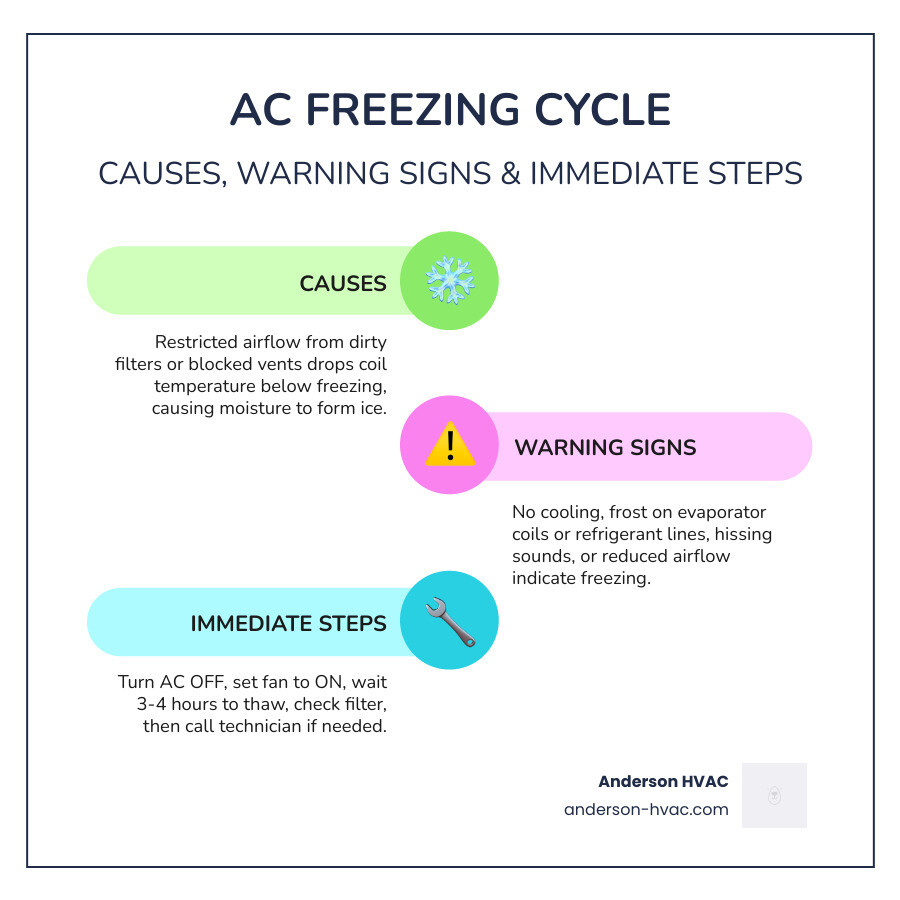
Ice Forming on Your AC Unit Causes and What to Do

When we talk about ice forming on your ac unit causes and what to do, we have to look at the heart of the cooling process: the evaporator coil. In a healthy system, this coil stays very cold—usually between 10 and 20 degrees Fahrenheit—to absorb heat from your indoor air. As warm air passes over the coil, the refrigerant inside absorbs that heat, and moisture from the air condenses on the coil’s surface (just like a cold soda can on a humid day).
Under normal conditions, this moisture drips into a drain pan and flows away. However, if the balance of pressure and airflow is disrupted, that condensation doesn’t stay liquid. It freezes. Once a thin layer of ice forms, it acts as an insulator, trapping the cold inside the coil and causing more ice to build up in a “snowball effect.” Eventually, you might see frost traveling all the way out to the copper refrigerant lines outside your home. If you are noticing this in your home, seeking professional Ac Repair In Clearfield Ut A Breath Of Fresh Air For Your Car And Home/ is the fastest way to get your comfort back on track.
Airflow Obstructions: Ice Forming on Your AC Unit Causes and What to Do
The most frequent culprit behind a frozen system is restricted airflow. Your air conditioner needs a steady “breath” of warm indoor air to keep the evaporator coil from getting too cold. If that breath is cut off, the refrigerant temperature plummets, and the moisture on the coil turns to ice.
Common airflow killers include:
- Clogged Air Filters: This is the #1 cause of AC freeze-ups. A thick layer of dust prevents air from reaching the coil.
- Blocked Return Vents: We often see homeowners place a new couch or heavy drapes directly over a return vent. This starves the system of air.
- Dirty Evaporator Coils: Over time, dust and pet hair bypass the filter and coat the coil itself. This grime acts as a barrier, preventing the air from warming the refrigerant.
- Collapsed Ductwork: If a duct in your attic or crawlspace is crushed or disconnected, the system can’t move enough air to maintain the proper temperature.
For those with specialized systems, following a Your Harrisville Ductless Air Conditioning Repair Roadmap/ can help identify why these specific units might be struggling with air intake.
Low Refrigerant: Ice Forming on Your AC Unit Causes and What to Do
It sounds counterintuitive, but having less cooling agent (refrigerant) actually makes the system colder. This is due to the physics of pressure. Refrigerant exists in a closed loop; it is never “used up” like gasoline. If levels are low, you have a leak.
When the refrigerant charge drops, the pressure inside the evaporator coil also drops. According to the Joule-Thomson effect, lower pressure leads to lower temperatures. The coil temperature falls below 32 degrees Fahrenheit, causing immediate icing. You might notice signs like a bubbling or hissing sound near the unit, or an oily residue on the refrigerant line connections. If you suspect a leak, our Chilling Out In Clinton A Locals Guide To Ac Repair Services/ can provide the expert leak detection and repair needed to stabilize your system.
Why a Frozen AC is a Serious Risk for Northern Utah Homeowners
Ignoring ice on your AC is a recipe for disaster. While the ice itself might melt, the damage it causes while frozen—and while melting—can be extensive.
The biggest risk is compressor failure. The compressor is designed to pump refrigerant in a gaseous state. If the coils are frozen, the refrigerant may not fully evaporate, leading to “liquid slugging.” This can destroy the compressor’s internal valves. Since the compressor is the most expensive part of your outdoor unit, this often leads to a full system replacement. Residents can avoid these headaches by staying on top of Dont Lose Your Cool With Farmington Ac Repair/ before a small freeze becomes a total burnout.
Other risks include:
- Water Damage: When a massive block of ice finally melts, it often overflows the condensate drain pan. This can lead to water damage in your ceilings, walls, or flooring.
- Mold Growth: The combination of excess moisture and darkness inside your air handler is the perfect breeding ground for mold and mildew.
- Sky-High Energy Bills: A frozen unit runs constantly because it can never reach the temperature set on the thermostat. You’ll be paying for electricity that isn’t actually cooling your home.
How to Safely Thaw Your System and Restore Airflow
If you find your AC has turned into an igloo, you must act quickly but safely. Do not simply turn the temperature up and keep the unit running.
| Feature | Natural Thawing (System OFF) | Fan-Only Thawing (Fan ON) |
|---|---|---|
| Speed | Slow (6-24 hours) | Fast (3-4 hours) |
| Airflow | None | Warm indoor air circulates |
| Safety | High | High |
| Effectiveness | Moderate | Best for thick ice |
The best method is to turn the cooling OFF at the thermostat but switch the fan setting to ON. This uses the fan to blow warm house air over the frozen coils, melting the ice from the inside out. Be sure to keep an eye on your drain pan and have some towels ready in case the melting ice overflows.
While the system thaws, take the time to inspect your air filter. If it hasn’t been changed in months, this is likely your culprit. For those in more rural areas, checking for Brigham City Ac Repair Keeping Your Home Chilled And Your Wallet Full/ ensures that once the ice is gone, the system stays efficient. If the unit is old and continues to freeze despite your best efforts, it might be time to consider Dont Lose Your Cool During Ac Replacement In Huntsville Ut/.
Long-Term Prevention Strategies for a Chill-Free Summer
We have been serving Northern Utah for over 40 years, and we can tell you that 90% of frozen AC calls could have been prevented with basic maintenance. Here is how you can keep your system running smoothly through May 2026 and beyond:
- Change Filters Monthly: During the peak of summer, check your filter every 30 days. If you have pets or live in a dusty area like Farr West, you may need to change it more often. Seeking Farr West Ac Repair Finding The Best And Most Affordable Services/ can help you set up a maintenance schedule that fits your home’s needs.
- Keep Vents Open: It is a myth that closing vents in unused rooms saves money. It actually increases pressure and reduces airflow, leading to frozen coils. Ensure at least 80% of your vents are open at all times.
- Clear the Outdoor Unit: Keep a 2-to-3-foot clearance around your outdoor condenser. Remove weeds, grass clippings, and debris that can block airflow.
- Mind the 60-Degree Rule: Don’t run your AC if the outdoor temperature is below 60°F. The system isn’t designed for it, and it will almost certainly freeze up.
- Schedule Annual Tune-Ups: A professional technician can clean the coils and check refrigerant levels before the heat hits. If you’re starting fresh, a Chill Out With A Seamless Ac Install In Harrisville/ ensures your new system is sized and charged perfectly from day one.
Frequently Asked Questions about Frozen AC Units
How long does it typically take for ice to thaw on an AC unit?
Depending on the thickness of the ice and the temperature of your home, it usually takes between 3 and 4 hours if you run the fan in “ON” mode. If you simply turn the system off and let it sit, it could take up to 24 hours for a solid block of ice to melt completely. Never attempt to restart the cooling until you are certain all ice is gone.
Is it safe to run the AC with ice on it?
No, it is not safe. Running a frozen AC puts immense strain on the blower motor and the compressor. Because ice acts as an insulator, the system will run indefinitely without actually lowering the temperature in your home. This wastes electricity and risks permanent hardware failure, particularly “liquid slugging” in the compressor.
Should you chip away at the ice manually?
Absolutely not. The evaporator coil is made of very thin, delicate aluminum fins and copper tubing. Using a screwdriver, ice pick, or even a hair dryer on high heat can easily puncture the refrigerant lines or flatten the fins. A punctured coil is a major repair that usually requires a full component replacement. Let the ice melt naturally using the system’s fan.
Conclusion
At Anderson HVAC, we know that a frozen air conditioner is more than just a mechanical failure—it is a disruption to your family’s comfort and peace of mind. As a family-owned business with over 40 years of experience in North Ogden and the surrounding Northern Utah communities, we’ve seen every cause of ice buildup imaginable. Whether it’s a simple filter change or a complex refrigerant leak, we pride ourselves on providing individualized service that exceeds expectations.
Don’t let a block of ice ruin your summer. If your unit is freezing up or blowing warm air, let our family take care of yours. Schedule professional AC repair in North Ogden today and get back to the cool, comfortable home you deserve.