


Essential Heating Repair Tips: Troubleshoot, Maintain & DIY Safely
Keeping your home warm and safe through North Ogden, UT winters starts with practical, easy-to-follow heating tips, a clear troubleshooting plan, and a regular maintenance schedule to prevent surprise breakdowns. This guide helps homeowners identify common furnace, boiler, and heat-pump problems, walk through safe DIY checks, and know when to call a certified technician—especially for safety risks like carbon monoxide. You’ll find step-by-step troubleshooting for no-heat situations, a seasonal maintenance checklist tuned for North Ogden, UT weather, and a simple repair-versus-replace framework to weigh cost and safety. We also cover emergency warning signs, quick homeowner actions, and straightforward how-to instructions for changing furnace filters and resetting thermostats. Throughout, the focus is safety, efficiency, indoor air quality, and the key parts to inspect—thermostat, air filter, blower motor, heat exchanger, pilot/ignitor, and ductwork—so you can restore comfort without unnecessary service calls.
Anderson HVAC is your local source for heating repair and advice across North Ogden, UT. Our technicians hold NATE, EPA, and carbon-monoxide certifications and handle furnace repair, boiler service, heat pump maintenance, and preventative tune-ups. If you want a professional check after trying these tips, Anderson provides free quotes and local service options to evaluate repairs or replacements. For urgent problems, you can contact Anderson directly or call (440) 252-0065 to request service or schedule an assessment.
What Are the Most Common Heating System Problems in North Ogden, UT?
In North Ogden, UT, many heating problems come from age, heavy seasonal use, and missed maintenance. Cold winters and frequent on/off cycles put extra strain on furnaces, boilers, and heat pumps. Poor airflow from a dirty filter, thermostat errors, and tripped breakers are common reasons for “no heat” calls, while odd noises usually point to blower issues, loose panels, or worn bearings. Freeze–thaw cycles can cause boiler pressure trouble and pipe stress, and heat pumps often face defrost or refrigerant problems as temperatures change. Knowing typical symptoms and likely causes helps you decide which checks are safe to attempt and which should be handled by a pro.
The list below highlights the top recurring local heating problems with a short cause so you can spot likely issues quickly.
- No heat: Incorrect thermostat settings, a closed gas valve, or a failed ignitor can keep the burner from running.
- Strange noises: Rattling, banging, or squealing often come from loose panels, a wearing blower motor, or delayed ignition.
- Short cycling: Fast on/off cycles are usually caused by clogged filters, an oversized system, or a faulty limit switch.
- High energy bills: Lowered efficiency from dirty parts, a failing heat exchanger, or an uncalibrated thermostat raises consumption.
- Pilot/ignitor failures: Corrosion, wiring issues, or control-board faults can stop ignition and may need part replacement.
How to Identify Furnace Issues Like No Heat or Strange Noises
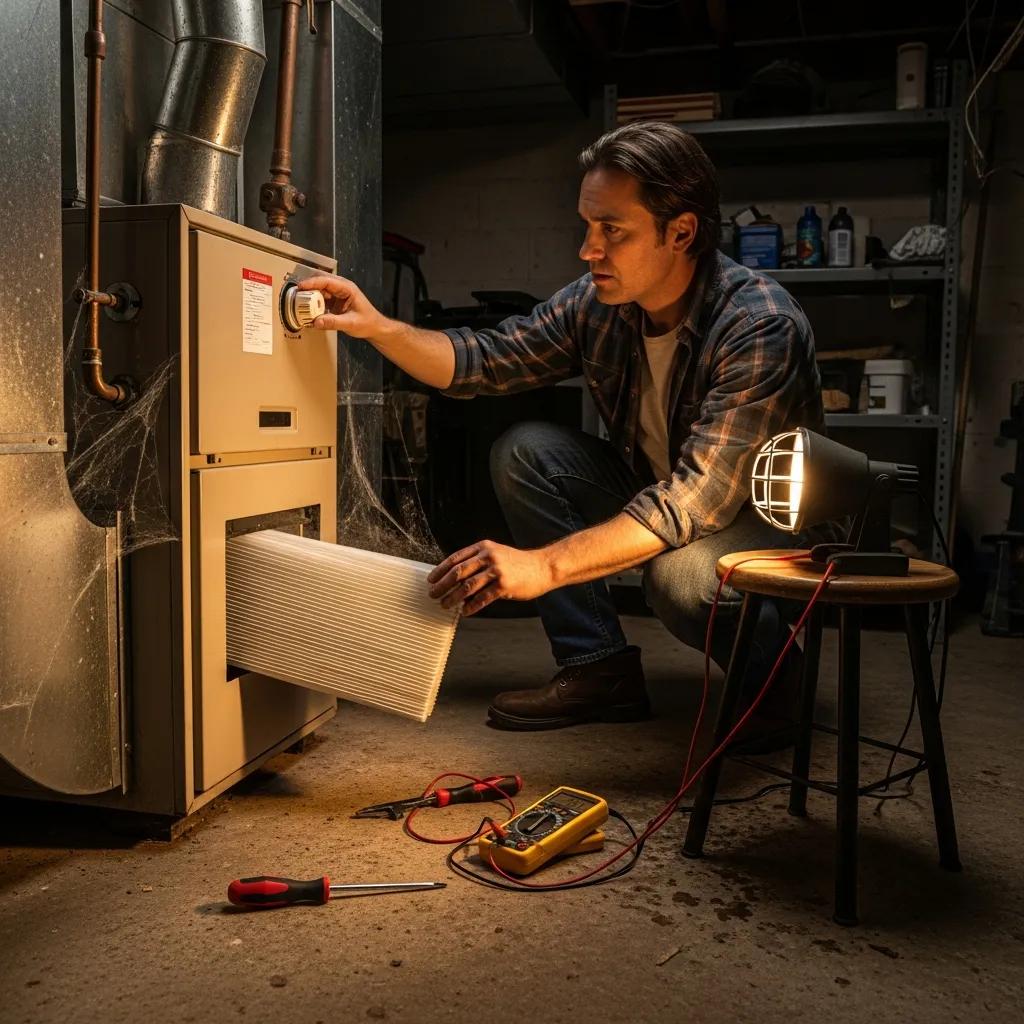
When a furnace won’t heat, start with simple, safe checks: confirm the thermostat is set to heat and the setpoint is above room temperature, swap or inspect the air filter, and make sure the breaker hasn’t tripped. If those are fine, listen for sounds: squeals often mean belt or bearing wear, bangs can indicate delayed ignition, and rattles usually point to loose panels or debris in the blower. Look for visual clues— a steady blue flame is normal; no flame or a yellow flame can mean ignition or gas-supply issues that are unsafe for DIY repair. If basic steps don’t bring heat or you smell gas, stop and call a certified technician right away.
These quick, non-invasive checks are safe for most homeowners and end with clear signs—persistent odd noises or combustion problems—that require professional intervention to protect people and equipment.
How Can Homeowners Perform DIY Furnace Repair and Troubleshooting?
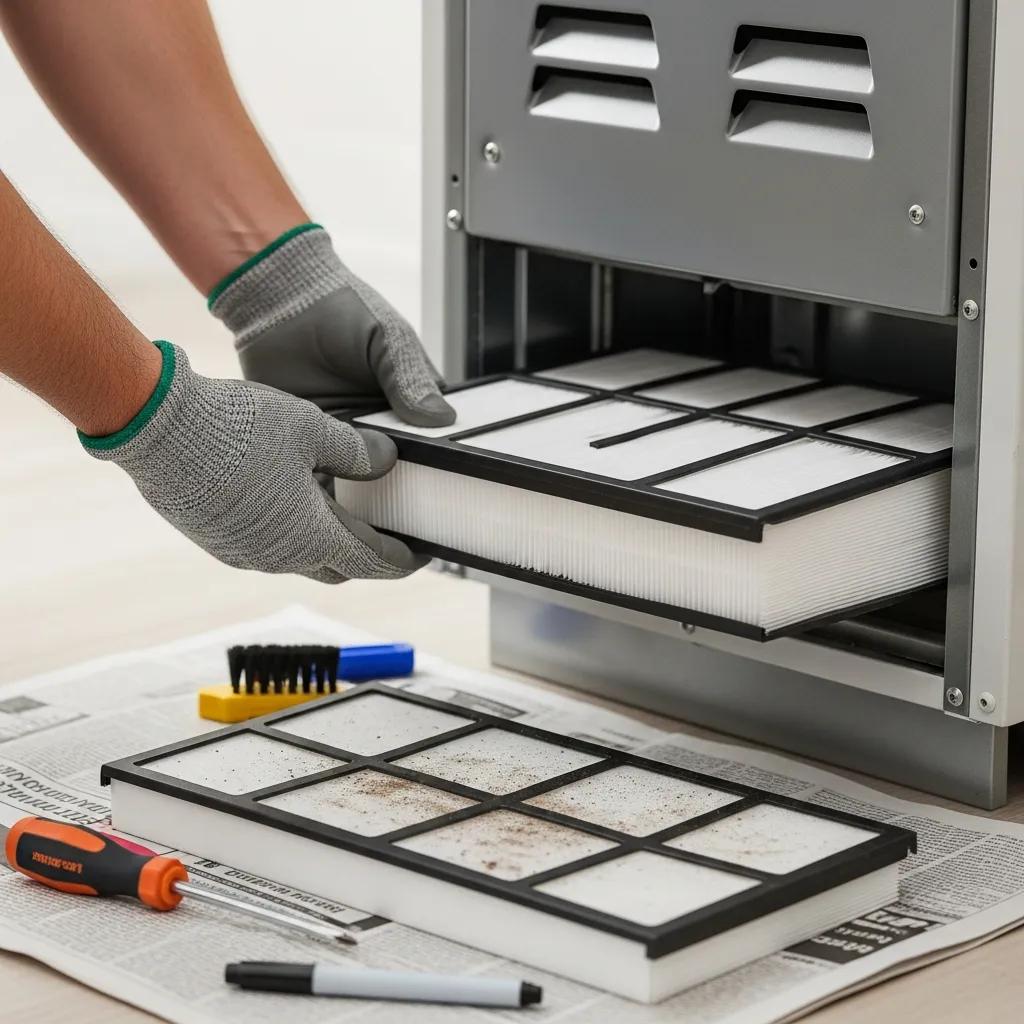
Many minor heating issues can be solved with careful DIY troubleshooting that stops short of unsafe work. Begin with the thermostat, check the circuit breaker, and replace the air filter. For older furnaces, relighting the pilot may help; for smart thermostats, a power-cycle can fix errors. Use basic tools—a screwdriver, fresh filters, and a multimeter if you’re comfortable—to verify power and control signals. Don’t open combustion chambers, touch ignitors, or test gas lines unless you’re certified. A structured approach cuts unnecessary service calls and gives technicians useful info when you do call for help.
Below are safe, step-by-step checks homeowners can perform, plus clear stopping points and expected outcomes to guide your next move.
- Check the Thermostat: Make sure mode is set to heat, the setpoint is above room temperature, and batteries are fresh if powered by batteries.
- Inspect the Air Filter: Replace dirty filters to restore airflow and improve combustion stability.
- Reset Breakers and Power Switches: Flip the furnace power switch off and on and check the breaker panel for a tripped circuit.
After these steps, run the system to see if operation returns to normal. If the furnace still won’t heat or makes unusual noises, follow the safety checklist and call a certified technician for deeper diagnostics.
What Are Step-by-Step Furnace Troubleshooting Tips for Common Issues?
A practical troubleshooting order starts with the thermostat, then checks power and airflow, and finally looks at ignition and safety controls—without opening combustion parts. Confirm thermostat programming and make a manual heat call, replace the air filter, and restart the furnace to observe the blower. Verify the breaker and furnace switch supply power, and scan visible wiring for obvious damage. If the unit still won’t ignite, don’t try to adjust the gas valve or burners—call a pro to safely inspect the ignitor, gas supply, and control board.
These steps put safety first and give you clear observations to share with a technician, so any follow-up visit is faster and more effective.
When Should You Stop DIY and Call a Certified HVAC Technician?
Stop DIY work and call a certified technician immediately if you smell gas, a carbon monoxide alarm sounds, you see exposed or sparking wiring, or you notice persistent flame or fuel irregularities. Complex or dangerous issues—cracked heat exchangers, refrigerant leaks, or failed control boards—require NATE- or EPA-certified tools and trained safety protocols. Certified techs perform combustion analysis, CO testing, and pressure or leak checks that aren’t safe for homeowners. Putting safety first protects people and the equipment.
Recognizing these red flags helps you escalate quickly and keeps emergency responses focused on household safety instead of equipment troubleshooting.
How Do You Maintain Your Heating System for Optimal Performance?
Regular maintenance preserves efficiency, extends equipment life, and improves indoor air quality by keeping filters, burners, blowers, ducts, thermostats, and safety controls clean and correctly adjusted. Seasonal tune-ups lower the risk of mid-winter failures by checking combustion efficiency, inspecting the heat exchanger for cracks, lubricating motors, and calibrating controls. Preventive service catches slow issues—like refrigerant loss or boiler pressure drift—before they become expensive repairs. A steady maintenance routine translates to measurable efficiency improvements and fewer emergency calls when the weather turns cold.
Below is a practical maintenance checklist tailored for North Ogden, UT homeowners showing tasks, recommended frequency, and homeowner benefit in a compact format.
| Component | Frequency | Homeowner Benefit |
|---|---|---|
| Air filter | Replace every 1–3 months | Better airflow, lower energy use, improved indoor air quality |
| Furnace/boiler tune-up | Annually (pre-winter) | Fewer breakdowns, safer combustion, optimized efficiency |
| Thermostat calibration | Annually | More accurate temperature control, less short cycling |
| Duct inspection | Every 2–3 years | Fewer leaks, improved heat distribution, better IAQ |
Keeping these tasks on a seasonal or annual calendar reduces unexpected failures and helps your heating system run reliably through the cold months.
What Is the Essential Heating System Maintenance Checklist for North Ogden, UT Homes?
For North Ogden, UT homes, focus maintenance on regular filter changes, combustion-safety checks, blower and motor lubrication, thermostat calibration, and sealing ducts to stop heat loss. At season start, replace filters and inspect the furnace cabinet for dust or signs of pests that can block airflow. Schedule a professional annual inspection that includes combustion analysis, heat-exchanger checks, and safety-control testing. For heat pumps, add an outdoor coil and refrigerant check before fall to confirm defrost controls and charge levels.
Following this checklist each year reduces fuel use, improves reliability, and supplies the data you need to decide between repair and replacement.
How Does Regular Maintenance Improve Energy Efficiency and Indoor Air Quality?
Regular maintenance restores proper airflow, keeps burners and heat exchangers running at design efficiency, and cuts short cycling caused by clogged parts—resulting in lower energy use. Clean filters and sealed ducts reduce pressure losses and blower run-time, which saves electricity and fuel while extending equipment life. Maintenance also removes dust and biological buildup from filters and ducts, improving indoor air quality and reducing allergens. Comparing energy use before and after service often shows immediate savings and helps justify scheduled tune-ups.
These benefits create a virtuous cycle: improved IAQ and efficiency lower costs and service needs, which in turn prolong system life and keep your home more comfortable.
When Should You Repair vs. Replace Your Heating System?
Repair vs. replace decisions depend on system age, how often it needs repairs, repair costs, safety concerns like a suspected cracked heat exchanger, and the efficiency gap versus modern units. A practical rule: if repair costs approach half the price of a new system and the unit is past typical service life, replacement often makes more sense. Safety issues—cracked heat exchanger or repeated ignition failures—strongly favor replacement. A certified technician can give accurate diagnostics, remaining-life estimates, and ROI comparisons to help you decide.
To make this clearer, the chart below pairs common factors with indicators and recommended homeowner actions.
| Factor | Typical Indicator | Recommended Action |
|---|---|---|
| System age | More than 15 years (furnace/boiler) | Consider replacement and review efficiency gains |
| Repair frequency | Multiple repairs in one season | Replacement likely saves money long-term |
| Repair cost | Single repair near 30–50% of replacement cost | Compare repair ROI vs. a new system |
| Safety concern | Cracked heat exchanger, CO risk | Replace immediately and prioritize safety |
What Signs Indicate It’s Time to Replace Your Furnace or Boiler?
Look for frequent or growing repair needs, big efficiency drops shown by rising bills, odd combustion smells or visible corrosion, and safety failures like a cracked heat exchanger. If the system needs repeated major parts—blower motor, control board, or heat exchanger—replacement usually makes financial sense. Newer high-efficiency systems also lower operating costs and can improve comfort with better zoning and modern controls. Tracking repair history and efficiency over a couple of seasons gives the clearest picture for replacement decisions.
These observable signs, combined with cost comparisons and safety checks, help homeowners choose the most economical and secure path forward.
How Does Anderson HVAC’s Expert Assessment Help in Making This Decision?
Anderson HVAC offers a certified assessment that reviews system age, service history, efficiency readings, and safety-critical parts to produce a clear recommendation and a written estimate. Our NATE-, EPA-, and carbon-monoxide-certified technicians inspect the heat exchanger, test combustion efficiency, examine electrical systems, and check refrigerant where applicable, then lay out repair-versus-replace scenarios with expected savings. Our free-quote policy lets homeowners compare options without obligation and explore Comfort Club preventive plans or available financing. A professional assessment turns observations into actionable next steps with transparent cost and safety trade-offs.
Getting a structured expert inspection removes guesswork and speeds accurate decision-making with measurable diagnostics and a documented proposal.
How Does Anderson HVAC Provide Fast, Certified Emergency Repairs?
Anderson HVAC offers 24-hour emergency service with NATE-, EPA-, and carbon-monoxide-certified technicians who follow strict safety steps, perform immediate hazard mitigation, and make temporary or permanent repairs. On emergency calls, our techs prioritize occupant safety with combustion testing, CO checks, gas-valve and line inspections, and electrical diagnostics before recommending repairs or replacement. For immediate help, call (440) 252-0065 to report the emergency and request priority dispatch; our team documents findings and gives clear, written recommendations after stabilizing the system.
Local presence, certifications, and transparent reporting give homeowners reliable emergency support when it matters most.
How Do You Change Your Furnace Filter and Reset Your Thermostat Safely?
Changing the furnace filter and safely resetting the thermostat are two of the highest-impact homeowner actions to restore airflow and fix control-related heating issues. A fresh filter improves airflow, reduces short cycling, and can resolve many “no heat” complaints; a thermostat reset clears programming errors and reboots smart devices. Both tasks are non-invasive and safe when you cut power to the furnace and follow the thermostat maker’s reset steps. Doing these simple chores regularly is an easy maintenance habit that improves comfort and may delay service visits.
The how-to steps below are model-agnostic and include safety notes to guide homeowners through filter replacement and thermostat resets.
What Are the Steps to Replace a Dirty Furnace Filter for Better Heating?
Find the filter slot on your furnace or the return-air grille, turn off power to the furnace, and slide out the old filter to check the size and MERV rating before buying a replacement. Install the correct-size filter following the airflow arrows on the frame, restore power, and run the system to verify improved airflow and quieter blower operation. Dispose of the used filter and note the replacement date so you can keep a 1–3 month change schedule for most homes—or more often if you have pets or heavy dust. You should notice better airflow, shorter run times, and improved indoor air quality within hours.
Regular filter changes are a simple, effective way to keep your heating system running efficiently and your home comfortable.
How to Troubleshoot and Reset Common Thermostat Problems
To reset a thermostat, first confirm it has power and replace batteries if applicable. Use the manufacturer’s factory-reset or power-cycle steps—many smart thermostats reboot by removing power for about 30 seconds. Make sure the thermostat is set to heat and the setpoint is 2–3°F above room temperature to trigger the system. If the thermostat recently lost programming, check wiring terminals for loose connections. If error codes persist or the unit misreports temperature after reset and calibration, replacement or professional calibration may be needed, since control failures can mimic furnace faults. Document what you tried and call a certified technician if resets don’t fix the problem.
When basic reset steps fail, recording your findings helps technicians diagnose control or wiring issues more quickly.
Ready to get Help with Certified Technicians & Transparent Estimatesn
Using these practical heating tips helps homeowners stay safe and comfortable through North Ogden, UT’s cold months. Basic troubleshooting and routine maintenance can prevent many service calls and save money, while knowing when to call a professional protects your family and your home. If you’d rather have an expert look, Anderson HVAC is ready to help with certified technicians and transparent estimates. Reach out to keep your home warm and secure this winter.