


Why Every North Ogden Homeowner Needs Heat Pump Maintenance Tips
Heat pump maintenance tips are something every homeowner should know — especially in Northern Utah, where your system works hard year-round to keep up with cold winters and warm summers.
Here are the most important heat pump maintenance tasks to stay on top of:
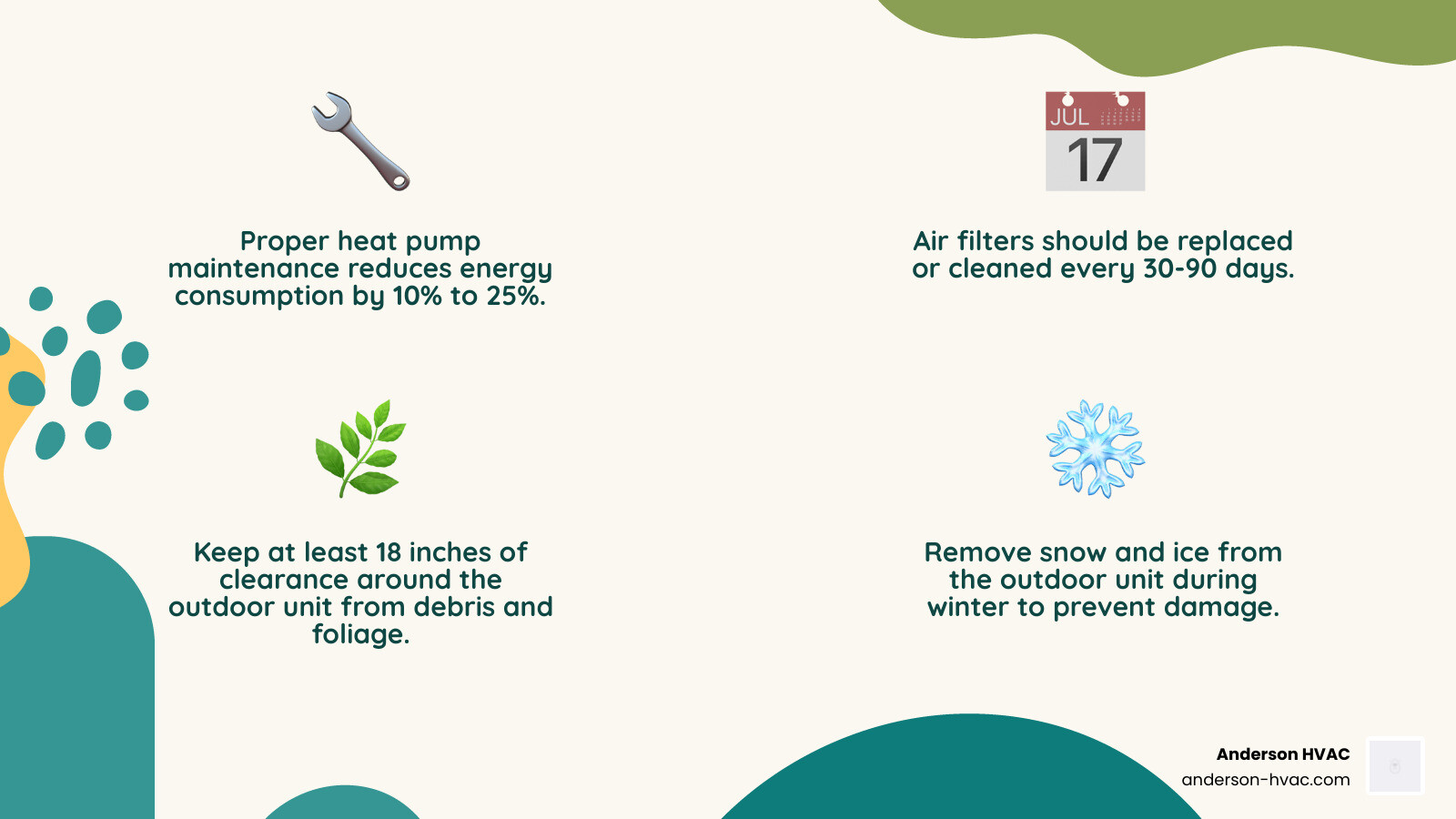
- Replace or clean air filters every 30–90 days
- Clear debris and foliage at least 18 inches from the outdoor unit
- Check registers and vents to make sure nothing is blocking airflow
- Remove snow and ice from the outdoor unit during winter months
- Inspect the condensate drain line for clogs or blockages
- Set your thermostat consistently to avoid triggering costly backup heat
- Schedule a professional tune-up at least once a year — ideally twice
A neglected heat pump can use 10% to 25% more energy than one that’s properly maintained. That gap adds up fast on your utility bill. On top of that, skipping maintenance shortens the life of your system — and an air-source heat pump typically lasts around 15 years when cared for properly.
The good news? Most of the basics are simple to do yourself. And knowing when to call a professional makes all the difference between a minor tune-up and a major repair.
Why Are Heat Pump Maintenance Tips Essential for My Home’s Efficiency?
In May 2026, as we look at the evolving landscape of home comfort, one thing remains certain: efficiency is king. For our neighbors in North Ogden and throughout Northern Utah, a heat pump is a significant investment in year-round comfort. However, its ability to move heat efficiently between the indoors and outdoors depends entirely on its mechanical health.
System longevity is the first major benefit of following heat pump maintenance tips. An air-source heat pump typically has an average lifespan of about 15 years. By staying proactive, you can ensure your system reaches—or even exceeds—this milestone. Neglect, on the other hand, is a fast track to premature failure.
Efficiency is where you’ll see the most immediate impact. Research shows there is a 10% to 25% difference in energy consumption between a well-maintained heat pump and a severely neglected one. When coils are dirty or airflow is restricted, the compressor and fans have to work overtime, pulling more electricity to achieve the same temperature.
By investing in heating services in North Ogden, you aren’t just fixing problems; you are engaging in preventative care. This reduces wear and tear on sensitive components like the reversing valve and motor bearings. Furthermore, a clean system provides better indoor air quality by ensuring that dust, pollen, and pet dander are properly filtered out rather than recirculated. Reliable operation means peace of mind when the Utah temperatures take a sharp dip or a sudden climb.
What DIY Tasks Can I Safely Perform for My Heat Pump in North Ogden?

You don’t need to be an HVAC technician to keep your system running smoothly. There are several tasks you can perform safely that will have a massive impact on your system’s performance.
First, let’s talk about the outdoor unit. In places like Pleasant View or Farr West, wind-blown leaves, grass clippings, and debris can easily clog the delicate fins of your outdoor coil. We recommend maintaining at least an 18-inch clearance of foliage around the entire unit. This ensures the system can “breathe” properly. If the coils look dusty or dirty, you can gently rinse them with a garden hose (with the power off), but never use a pressure washer, as it can bend the aluminum fins.
Inside the home, indoor air quality improvements start with your registers and vents. Ensure that furniture, rugs, or curtains are not blocking the airflow. Proper airflow pathways are essential; if you close too many interior doors, it can create pressure imbalances. In some cases, undercutting bedroom doors or installing jumper ducts can help air return to the central intake more efficiently.
Homeowner-Safe Maintenance Checklist:
- Clear the perimeter: Remove weeds, leaves, and snow from around the outdoor unit.
- Visual inspection: Look for sagging refrigerant line insulation or signs of pests.
- Clean the registers: Vacuum dust from supply and return vents.
- Monitor the drain: Ensure the condensate pan isn’t overflowing and the line is clear.
Monthly Heat Pump Maintenance Tips for Air Filters
The single most important DIY task is managing your air filters. At least a third of all service calls we see could be resolved simply by replacing a dirty or clogged filter.
We suggest checking your filter every 30 days, especially during peak heating or cooling seasons in Northern Utah. While some high-efficiency 4-inch filters can last up to six months, standard 1-inch pleated filters usually need a swap every 30 to 90 days. Factors like having pets, living near construction in Syracuse, or high dust levels in the home will increase this frequency.
When choosing a filter, pay attention to MERV ratings. A higher MERV rating traps smaller particles, improving air filtration solutions, but if the rating is too high for your specific system, it can actually restrict airflow and cause the motor to burn out. Always check your manufacturer’s recommendations. When you install the new filter, make sure the airflow arrows point toward the furnace or air handler.
Winter Care and Outdoor Unit Protection
Winter in Northern Utah brings unique challenges for heat pumps. Unlike a traditional AC that sits idle in the snow, your heat pump is working hard.
Snow removal is critical. If heavy snow or drifts block the outdoor unit, the system cannot extract heat from the air. This forces it to run almost exclusively on expensive backup heat. Similarly, watch out for ice buildup. While the system has a built-in “defrost cycle” to melt light frost, it cannot handle a thick block of ice caused by a leaking gutter dripping water onto the unit.
Proper installation helps here, too. We ensure units are elevated 4 to 8 inches above the ground on “snow feet” or a sturdy stand. This allows melted ice to drain away during the defrost cycle rather than refreezing at the base and trapping the unit in a block of ice.
When Should I Call a Pro for Professional Heat Pump Maintenance?
While DIY tasks are great for day-to-day efficiency, a heat pump is a complex machine that requires a professional touch. Because heat pumps work 12 months a year—unlike a furnace that rests in summer or an AC that sleeps in winter—we recommend a biannual service schedule.
The best times to schedule are in the Spring (March–May) and the Fall (September–November). During a professional HVAC maintenance visit, a technician performs technical tasks that require specialized tools and EPA certifications.
For example, checking the refrigerant charge is not a DIY job. Low refrigerant is almost always a sign of a leak, and overcharging a system can be just as damaging as undercharging it. A pro will also inspect electrical terminals, apply nonconductive coatings where needed, and test the reversing valve to ensure it can switch between heating and cooling modes without sticking.
| Task | DIY Homeowner | Licensed Professional |
|---|---|---|
| Replace Air Filters | X | |
| Clear Outdoor Debris | X | |
| Clean Registers/Vents | X | |
| Check Refrigerant Levels | X | |
| Inspect Electrical Connections | X | |
| Lubricate Motors | X | |
| Test Reversing Valve | X | |
| Calibrate Thermostat | X | |
| Seal Duct Leakage | X |
Identifying When You Need Professional Heat Pump Maintenance Tips
Sometimes, your system will tell you it needs help before your scheduled visit. Being aware of these warning signs can save you from a total system breakdown during a Kaysville cold snap.
Listen for unusual noises. Grinding, rattling, or hissing are all red flags. A grinding sound often points to a motor bearing issue, while hissing could indicate a refrigerant leak. If you notice musty odors, you might have a “dirty sock syndrome” issue where bacteria have grown on the indoor coils, requiring professional cleaning.
Other signs include:
- Short cycling: The system turns on and off too frequently.
- Emergency heat activation: If your “Auxiliary” or “Emergency” heat light stays on when it isn’t exceptionally cold outside, the heat pump isn’t doing its job.
- Performance changes: If some rooms are suddenly much colder than others, you may have ductwork issues or heating repair needs that need immediate attention.
How Do I Optimize My Thermostat Settings for Better Savings?
Thermostat management for a heat pump is different than for a gas furnace. With a furnace, “setting back” the temperature by 10 degrees while you’re at work saves a lot of money. With a heat pump, large setbacks can actually cost you more.
When you crank the thermostat up by more than two or three degrees at once, many systems interpret this as a “crisis” and activate the backup electric resistance strips. These “heat strips” are significantly less efficient—sometimes costing 2 to 3 times more to operate than the heat pump itself. For the best savings, find a comfortable temperature and leave it there, or use a smart thermostat specifically designed for heat pumps that can ramp up the temperature gradually without triggering the backup heat.
If you have ductless HVAC solutions, the “set it and forget it” rule is even more important. We also recommend setting your fan to the “Auto” position rather than “On.” This ensures the fan only runs when the system is actually heating or cooling, which prevents humidity from being blown back into the house during the summer and saves electricity year-round.
Frequently Asked Questions about Heat Pump Care
What is the average lifespan of a heat pump?
In Northern Utah, an air-source heat pump typically lasts about 15 years. However, with consistent care and professional maintenance, some units can last 20 years. Geothermal units, which are protected from the elements underground, can last 25 years or longer.
How often should I change my air filter?
You should check your filter every month. Most homeowners in areas like Layton or Roy find they need to replace a standard 1-inch filter every 30 to 90 days. If you have pets or allergies, you’ll likely be on the 30-day schedule.
Is it normal for my heat pump to have ice on it in winter?
A light coating of frost is normal. The system will periodically enter “defrost mode” to melt this away. However, if the unit is encased in a thick block of ice or if the top fan is blocked by snow, it needs immediate attention to prevent damage.
Conclusion
Taking care of your heat pump doesn’t have to be a daunting task. By following these heat pump maintenance tips, you can enjoy a more comfortable home, lower energy bills, and a system that lasts for years to come. From simple monthly filter checks to keeping the outdoor unit clear of Utah’s winter snow, your DIY efforts go a long way.
However, the technical health of your system relies on professional expertise. At Anderson HVAC, we’ve spent over 40 years serving the North Ogden community and surrounding areas like Brigham City, Kaysville, and Morgan. As a family-owned and operated business, we pride ourselves on providing individualized service that exceeds expectations. We know the local climate, and we know exactly what your system needs to thrive in it.
Don’t wait for a breakdown to think about your home comfort. Schedule your professional heat pump maintenance today and let our family take care of yours.

