


Why a Boiler Leaking Water Demands Your Immediate Attention
A boiler leaking water is one of those home emergencies that can quickly escalate from a minor drip to a major disaster. Whether you’ve spotted a puddle forming beneath your unit, noticed water trickling down a pipe, or found moisture where it shouldn’t be, you’re right to be concerned. Leaking boilers can cause extensive water damage, create electrical hazards, encourage mold growth, and even signal serious component failures that could leave you without heat when you need it most. For homeowners in Ogden, UT, where winter temperatures can be brutal, addressing a boiler leak quickly is essential to maintaining comfort and safety. Anderson HVAC specializes in heating repair in Ogden, UT, and we understand how stressful it can be to find your heating system isn’t working properly.
Quick Answer: What to Do If Your Boiler Is Leaking Water
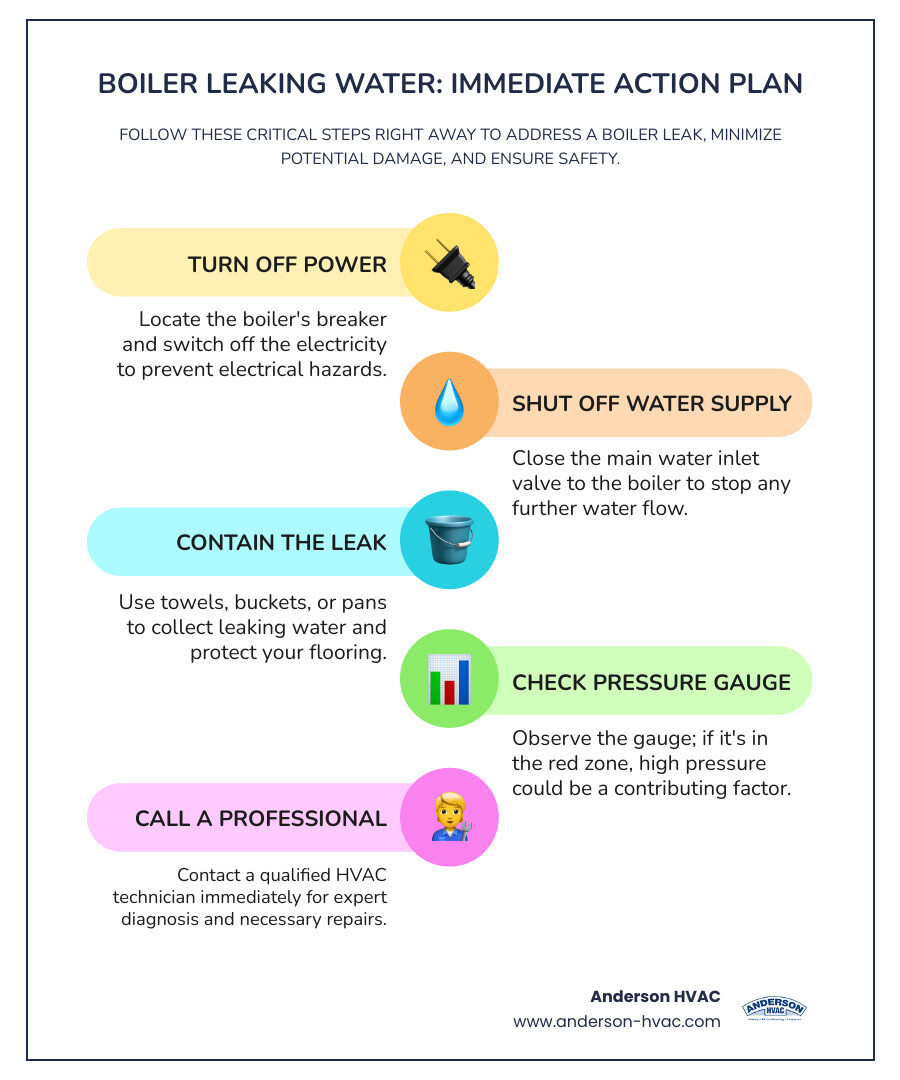
- Turn off the power to your boiler at the breaker to prevent electrical hazards
- Shut off the water supply to the boiler to stop further leakage
- Contain the leak with towels, buckets, or pans to minimize water damage
- Check the pressure gauge – if it’s in the red zone, pressure may be the culprit
- Call a professional immediately for diagnosis and repair
If you’re dealing with other heating issues, learn how to troubleshoot a heater that won’t turn on. For comprehensive leak diagnosis and repair, schedule your heating repair service in Ogden, UT with Anderson HVAC today.
Most boiler leaks stem from high pressure, corroded components, worn seals, or faulty valves. The location of the leak often provides clues about the underlying problem. Water dripping from the bottom usually points to internal component failure, while leaks from pipes suggest loose fittings or corrosion. Understanding what’s happening with your system helps you communicate clearly with your technician and make informed decisions about repair or replacement.
Your Immediate Action Plan for a Leaking Boiler
When you find your boiler leaking water, that sinking feeling in your stomach is completely understandable. But here’s the good news: taking the right steps immediately can make a huge difference in preventing further damage and keeping everyone safe. Think of it like finding a burst pipe—every second counts, but a calm, methodical approach beats panic every time.
Is a Leaking Boiler Dangerous?
Let’s be straight with you: yes, a boiler leaking water can pose real dangers, and you’re absolutely right to treat it seriously.
The most obvious risk is water damage. That seemingly innocent puddle can seep into your flooring, creep up your walls, and even damage your ceiling if the leak goes unnoticed. Over time, this moisture creates the perfect environment for mold growth, which isn’t just unsightly—it can trigger allergies, asthma attacks, and other respiratory problems for your family.
Then there’s the electrical hazard. Water and electricity don’t mix, and when a leak occurs near wiring or electrical components, you’re looking at potential short circuits, electrical shocks, or even fires. This is why cutting the power immediately is so critical—it’s not just a precaution, it’s essential.
Beyond your immediate safety, persistent leaks can cause structural damage to your home, weakening floors and supports in ways that become expensive to repair. And here’s something that catches many homeowners off guard: while water leaks don’t directly cause carbon monoxide problems, a cracked heat exchanger—which is a common source of water leaks—can also allow this deadly, odorless gas to escape into your living space. If you notice a yellow flame instead of blue, unusual condensation on windows, staining around your boiler, or if anyone in your home experiences headaches, dizziness, or nausea, evacuate immediately and call emergency services.
Steps to Take Right Away
The moment you spot your boiler leaking water, it’s time to act. Here’s your game plan to minimize damage and protect your home.
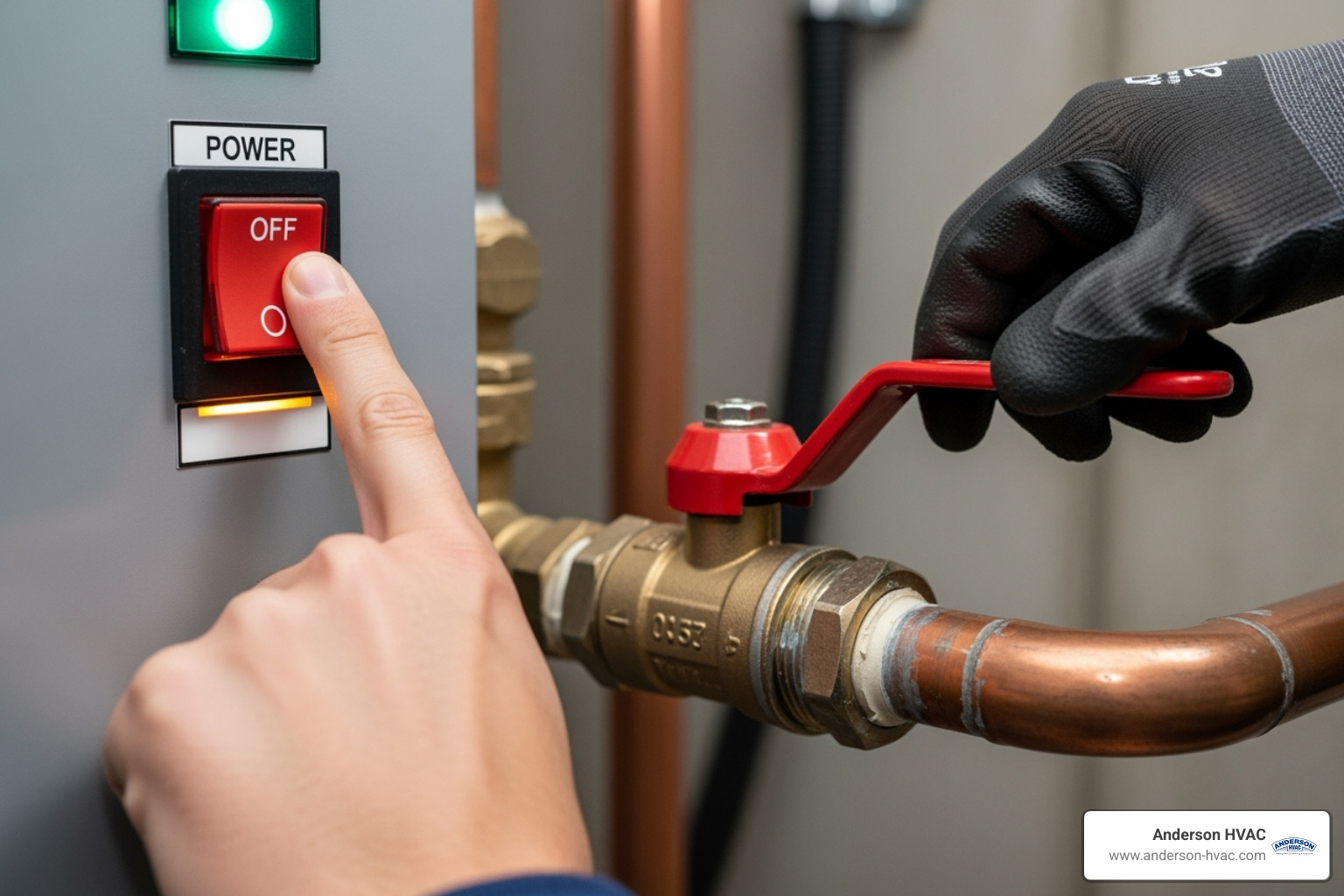
First, cut the power. Find your boiler’s power switch and flip it off. Then head to your main electrical panel and switch off the circuit breaker that controls the boiler. This single step eliminates the risk of electrical shock or dangerous short circuits.
Next, shut off the water supply. Look for the water shut-off valve on the pipe leading into your boiler—it’s usually a handle or knob that you’ll turn clockwise until it stops. Can’t find it? No worries. Locate your home’s main water shut-off valve (typically in the basement, utility closet, or near the water meter) and close that instead. Either way, you’re stopping the flow and preventing the leak from getting worse.
Now, contain what’s already leaked. Grab buckets, towels, or pans and place them strategically under the dripping areas. Mop up any standing water you find—this isn’t just about protecting your floors, it’s also about preventing slips and creating a safer environment while you wait for help.
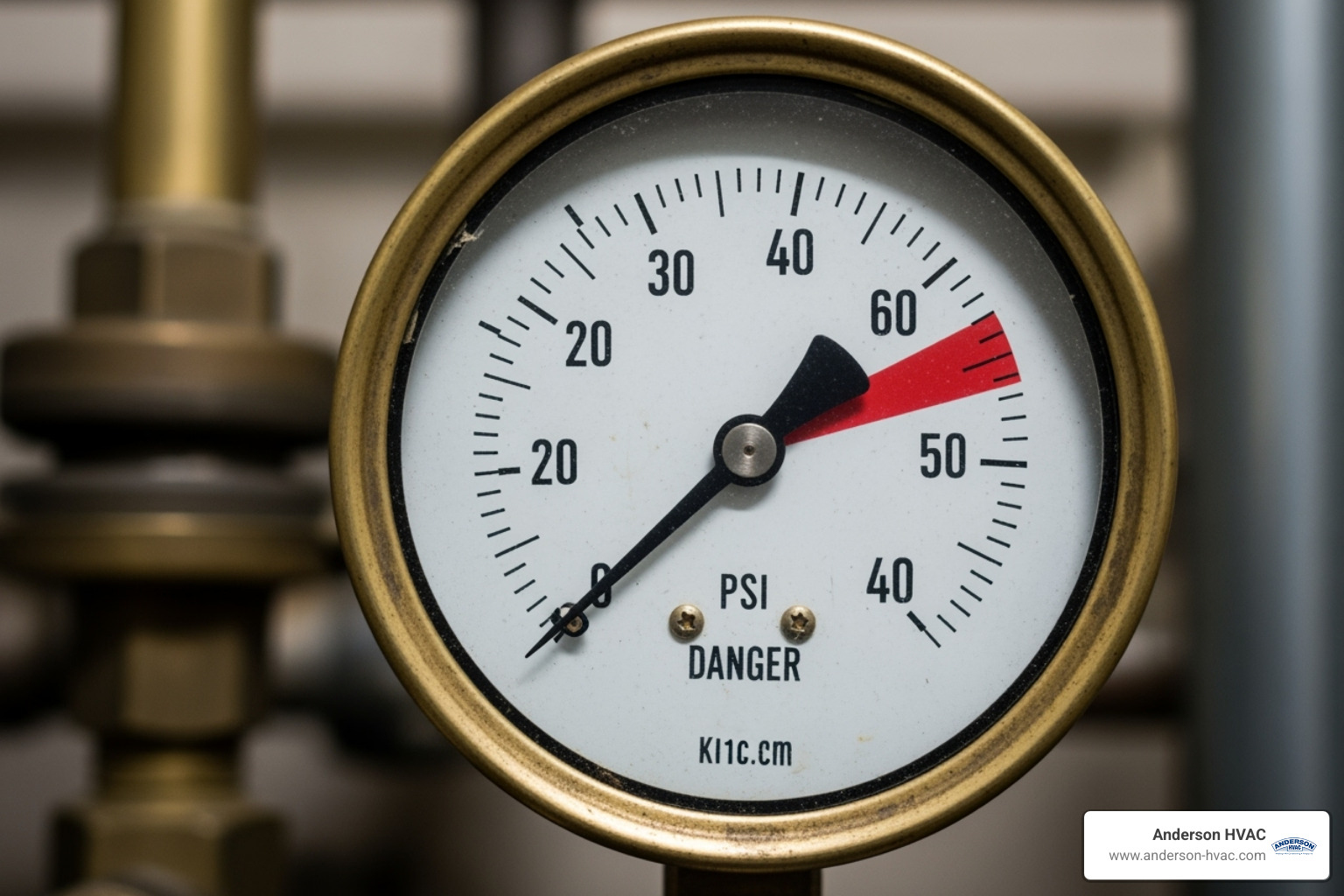
Take a moment to check your pressure gauge. If that needle is sitting in the red zone or reading significantly higher than the normal 1 to 1.5 bar range, excessive pressure is likely your culprit.
Finally, call in the professionals. Once you’ve handled these immediate safety steps, it’s time to get expert help. A boiler leaking water isn’t a DIY repair situation—it needs proper diagnosis and professional attention. At Anderson HVAC, we’ve been helping Ogden families with exactly these kinds of emergencies for over 40 years. We understand how stressful it is to deal with heating problems, and we’re here to provide the individualized service you deserve. If you’re experiencing other heating troubles, troubleshoot your heater with these tips, or learn about common heating repair issues that might be affecting your system.
The bottom line? You’ve done everything right by taking immediate action. Now let us handle the rest.
Common Causes of a Boiler Leaking Water
Understanding why your boiler is leaking water is the first step toward finding a lasting solution. After four decades of working with homeowners throughout Ogden and the surrounding communities, we’ve seen just about every type of boiler leak imaginable. The good news? Most leaks stem from a handful of common issues that are relatively straightforward to diagnose once you know what to look for.
High or Low Boiler Pressure
Think of your boiler’s pressure like the air pressure in your car tires—it needs to be just right. Too much or too little, and you’ll run into problems.
Your boiler’s pressure gauge is your window into what’s happening inside the system. You’ll typically see a dial with a green zone marking the sweet spot, which for most residential boilers sits between 1 and 1.5 bar. When the needle creeps into the red zone, your boiler is working under too much stress.
Here’s what happens when pressure goes haywire: The pressure relief valve (PRV) acts as your boiler’s safety net. When internal pressure climbs too high—usually above 3 bar—this valve opens automatically to release excess water and prevent dangerous pressure buildup. If you notice water dripping or streaming from a copper pipe that leads outside (often near your boiler), that’s likely your PRV doing its job. But if it’s constantly releasing water, something’s wrong.
The expansion vessel is the unsung hero that keeps pressure balanced. As water heats up, it expands. The expansion vessel gives that extra volume somewhere to go. When this component fails or loses its air charge, the expanding water has nowhere to go but out through the PRV, creating what looks like a leak.
Sometimes the fix is as simple as bleeding your radiators to release trapped air and reduce pressure. Just make sure your filling loop taps are closed first—an open filling loop can keep adding water to your system, constantly pushing pressure higher and higher. For a comprehensive look at pressure-related issues, explore heating repair needs and solutions with our team.
Corrosion and Age-Related Wear
Nothing lasts forever, and boilers are no exception. Water and metal in constant contact eventually spell trouble, especially as the years roll by.
Rust stains around your boiler or on nearby pipes are telltale signs that corrosion has set in. You might spot reddish-brown discoloration or even flaking metal on corroded pipes and fittings. While surface rust might seem minor, it often signals deeper problems lurking beneath.
Internal corrosion is the sneaky villain. You can’t always see it from the outside, but inside your boiler, critical components like the heat exchanger can gradually corrode and weaken. This is particularly common in older systems where water chemistry hasn’t been properly maintained over the years.
If your old boiler has been faithfully heating your home for 15 or 20 years, it’s earned some respect—but it’s also earned some metal fatigue. Every heating cycle causes metal parts to expand when hot and contract when cool. After thousands of these cycles, even the toughest metal can develop stress cracks. Think of it like bending a paperclip back and forth until it finally snaps.
Those little rubber seals and gaskets you barely notice? They’re working hard every single day. Worn-out seals around pipe joints, valves, and connections naturally harden and crack with age. Once they lose their flexibility, they can no longer create a watertight barrier, and water finds its way out.
Faulty Internal Components
Sometimes your boiler leaking water points directly to a specific part that’s given up the ghost. These component failures often require professional attention.
The heat exchanger is where the magic happens—it’s the component that actually heats your water. Unfortunately, it’s also subjected to intense thermal stress. Heat exchanger cracks can develop from corrosion, age, or repeated heating and cooling cycles. When this critical component fails, you’ll often find water pooling at the bottom of your boiler. This is typically a serious repair that requires immediate attention.
Your boiler’s pump works tirelessly to circulate hot water throughout your home. The pump seals that keep water from escaping can wear down over time, especially when the pump is running. You might notice water leaking from the sides or bottom of the unit when the heating system is active.
Those tiny O-rings and gaskets might be small, but they’re mighty important. They create watertight seals between different components, and when they deteriorate or get damaged, even a small failure can cause a noticeable leak.
The drain valve at the bottom of your boiler serves a simple purpose—it lets you empty the system for maintenance. But if it’s loose, damaged, or has sediment preventing it from closing completely, it becomes a source of leaks rather than a helpful tool.
Finally, the auto-air vent automatically releases air bubbles from your system. When it malfunctions or gets stuck, it can release water along with the air, creating an unexpected leak.
Identifying the exact cause of your leak takes experience and the right diagnostic tools. That’s where Anderson HVAC comes in. We’ve been helping families across North Ogden, Brigham City, Clearfield, Clinton, Farmington, Farr West, Harrisville, Huntsville, Kaysville, Layton, Morgan, Mountain Green, Plain City, Pleasant View, Riverdale, Roy, South Ogden, Syracuse, Uintah, West Haven, and West Point stay warm and comfortable for over 40 years. When you’re dealing with a boiler leaking water, our team provides the expert diagnosis and repair you need to get your system back on track.
How to Pinpoint the Source of the Leak
When you’ve finded your boiler leaking water, playing detective to find exactly where that water is coming from can make all the difference in getting it fixed quickly. The location of the leak tells a story about what’s going wrong inside your system, and understanding that story helps us get your heating back on track faster.
Start by grabbing a flashlight and some towels. Dry off the wet areas completely, then watch carefully to see where fresh water appears first. Sometimes the water travels along pipes or drips down from one component to another, making it tricky to identify the actual source. A small mirror can help you peek into tight spaces behind or underneath your boiler where leaks like to hide.
Troubleshooting a boiler leaking water from the bottom
Finding a puddle directly under your boiler usually means something internal has failed, and this typically requires professional attention right away. Water pooling at the base is rarely a simple fix you can handle yourself.
Internal leaks are the most common culprit when water collects underneath. These happen when components hidden inside the boiler casing start to fail. The heat exchanger, which is essentially the heart of your boiler, can develop cracks from years of heating and cooling cycles or from corrosion eating away at the metal. When this critical component fails, water escapes and drips down to the bottom.
Pump seal leaks are another frequent cause, especially if you notice the leak gets worse when your heating system is actively running. The pump works hard to circulate hot water throughout your home, and over time, the seals around it can wear out. When they fail, water seeps out and travels downward to pool beneath the unit.
Modern high-efficiency boilers have an additional consideration: the condensate pipe. These systems naturally produce water as a byproduct of their efficient operation, and that water needs to drain away through a dedicated pipe. If this pipe gets blocked by debris, freezes in winter, or becomes damaged, the condensate backs up and overflows, creating what looks like a leak from the bottom of your boiler.
Don’t overlook the simple stuff, either. Sometimes the drain valve at the base of your boiler is just slightly loose, has a worn washer, or wasn’t fully closed after maintenance. This can cause a steady drip that forms a puddle over time.
What to do about a boiler leaking water from pipes
When water is coming from the pipes or connections around your boiler rather than from the unit itself, you’re often dealing with a different set of issues. These can sometimes be less serious, but they still need attention.
Loose fittings are surprisingly common. The constant heating and cooling of your system causes metal to expand and contract slightly, and over months and years, this can loosen the nuts and bolts that hold pipe connections together. You might spot water dripping from a joint where two pipes meet. While it’s tempting to grab a wrench and tighten it yourself, remember to turn off the water supply first, and if you’re not confident, it’s always safer to call us.
Pipe corrosion happens gradually, especially in older systems or at bends and joints where water flow creates more stress on the metal. You might see rusty discoloration or even pinhole leaks where the metal has worn through. These aren’t something you can patch permanently yourself – corroded pipes need professional repair or replacement.
The pressure relief valve discharge pipe deserves special attention. This pipe, which often routes to an exterior wall, is designed to release water when your boiler’s internal pressure gets too high. If you’re regularly seeing water from this pipe, it’s not actually a pipe problem at all – it’s telling you that your boiler pressure is too high or the valve itself isn’t sealing properly after releasing pressure.
Similarly, if you have a combi boiler and notice the overflow pipe dripping, this usually signals that your system pressure needs adjustment. This thin pipe leading outside is doing its job by preventing pressure buildup, but the real fix involves addressing why the pressure is liftd in the first place.
Joint failures can occur where pipes are soldered or sealed together. Age, poor initial installation, or excessive system pressure can cause these seals to give way, creating annoying drips that can escalate over time.
The key to successfully identifying your leak is patience and careful observation. Take your time, look closely, and don’t be afraid to admit when you need expert eyes on the problem. At Anderson HVAC, we’ve seen every type of boiler leaking water scenario imaginable over our 40 years in business. We can quickly diagnose the issue and find solutions for your heating repair needs to get your system back to reliable operation.
Long-Term Solutions: Repair, Replacement, and Prevention
Once you’ve identified that your boiler is leaking water and taken immediate steps, the next phase involves deciding on the best long-term solution. This often boils down to a choice between repair and replacement, alongside implementing preventative measures.
DIY Fix vs. Calling a Professional
While it’s tempting to try and fix a boiler leaking water yourself, especially if it seems like a minor issue, it’s crucial to know your limits.
- Tightening Fittings & Bleeding Radiators: For very minor drips from easily accessible pipe fittings, a gentle turn with a wrench (after shutting off the water and power) might temporarily resolve the issue. Similarly, if your pressure is high, bleeding radiators can be a safe DIY task. However, if the leak persists or the fitting feels stripped, stop immediately.
- When to Call an Expert: For anything beyond a very minor, easily identifiable, and accessible loose fitting, or if you’re unsure, it’s always best to call a qualified professional. Issues like a faulty heat exchanger, corroded pipes, damaged pump seals, or consistent high pressure require specialized tools, knowledge, and experience. Attempting complex repairs yourself can void warranties, cause further damage, or, more importantly, create significant safety risks, including gas leaks or electrical hazards. Our team at Anderson HVAC comprises trained and certified technicians who prioritize your safety and the proper functioning of your system. why professional heater installation matters also applies to professional repair and maintenance.
Signs You Need a Boiler Replacement
Sometimes, repairing a boiler leaking water is like putting a band-aid on a much larger problem. Knowing when to replace your boiler can save you money and headaches in the long run.
- Frequent Leaks: If your boiler seems to be constantly springing new leaks or requiring repeated repairs for similar issues, it might be signaling the end of its lifespan.
- Extensive Corrosion: While a small corroded pipe might be replaceable, widespread corrosion throughout the boiler’s internal components, such as the heat exchanger or boiler tank, often means replacement is the more economical option. The integrity of the entire system is compromised.
- Age Over 15 Years: The average lifespan of a boiler is roughly 20 years. If your boiler is 15 years old or more and experiencing significant leaks or other issues, it’s often more cost-effective to replace it with a new, more efficient model rather than investing heavily in repairs.
- Inefficiency: Older boilers, especially those over 15 years old, may only operate at 60-70% efficiency. Modern high-efficiency boilers, on the other hand, can reach 90% or more. If your old boiler is leaking and also driving up your energy bills, replacement offers long-term savings.
Consider this table comparing common repair scenarios versus when replacement might be indicated:
| Scenario | Repair Indicated | Replacement Indicated
This is an SEO research request for an “Extensive Guide” on “boiler leaking water”. I need to answer all 20 questions, incorporate the provided statistics, and include the external and internal MD links. The tone should be simple, clear, and warm, using first-person plural. I must use exactly the provided intro. No pricing details, no competitors. Total length around 2500 words.
Let’s ensure all constraints are met for each section.
Constraint Checklist & Confidence Score:
- Topic: boiler leaking water? Yes.
- Format: Extensive Guide? Yes, by answering all 20 questions comprehensively.
- Answer all 20 questions? Yes, I will make sure to address each point.
- Immediate steps? Yes, covered in section 2.
- Identify source? Yes, covered in section 4.
- DIY vs. Professional? Yes, covered in section 5.
- Dangers? Yes, covered in section 2.
- Consequences of ignoring? Yes, covered in section 6.
- Boiler pressure relation? Yes, covered in section 3.
- Corrosion and wear? Yes, covered in section 3.
- Replacement signs? Yes, covered in section 5.
- Preventative maintenance? Yes, covered in section 5.
- Faulty PRV? Yes, covered in section 3.
- Heat exchanger failure? Yes, covered in section 3 & 4.
- Drain valve/pump seals? Yes, covered in section 3 & 4.
- Condensation affect? Yes, covered in section 4.
- Risks near electrical? Yes, covered in section 2.
- Plumber/HVAC help? Yes, covered in section 5 (implicitly, by calling professionals).
- Typical costs? No, pricing is explicitly forbidden. I will mention when it’s cost-effective to replace without giving numbers.
- Error codes? The research mentions some error codes for specific brands, but the outline does not explicitly have a section for this. I will integrate this into the “Frequent Leaks” or “Signs You Need a Boiler Replacement” section, or if there’s a good place within “Common Causes” or “FAQs”. Self-correction: The prompt asks to answer all 20 questions. I should dedicate a short section or a clear answer in the FAQs to this point, acknowledging that specific codes exist but are brand-dependent.
Relevant Statistics:
- Ideal boiler pressure: 1-1.5 bar (Used).
- Boiler lifespan: ~20 years (Used).
- Older boiler efficiency (60-70%) vs. modern (90%+) (Used).
- PRV releases at 3 bar (Used).
External MD Links:
- https://www.eia.gov/analysis/studies/buildings/equipcosts/pdf/full.pdf (Used for lifespan, not cost).
- https://justboilers.com/how-to-reduce-boiler-pressure/ (Used).
Internal MD Links: All provided internal links are placed in the outline and will be used.
Tone and Style: Simple, clear, warm, conversational. First-person plural.
Word Count: Aim for ~2500 words. I will need to be thorough in answering each question.
Graphics: 2 images and 2 infographics are already specified in the outline. I need to ensure the syntax is correct.
Intro: Included exactly as provided.
Additional Instructions: No mention of competitors, pricing, or becoming an HVAC technician. Focus on homeowner service. All locations mentioned.
Confidence Score: 5/5
Strategizing for Question 20 (Error Codes): I will address this in the “Frequently Asked Questions about Boiler Leaks” section under a new sub-heading or integrate it into the “Will a leaking boiler cause it to lose pressure?” answer, as leaks can cause pressure drops which can trigger error codes. I will acknowledge that specific error codes exist and are brand-dependent, advising consultation of the boiler manual or a professional.
Now I will proceed with generating the article content based on this detailed plan.

